
Finance Panel Picks 46 Subjects for 2026-27, Including Digital Assets and AI
A Lok Sabha bulletin lists subjects ranging from currency management and price stability to the economic data mechanism and corporate governance
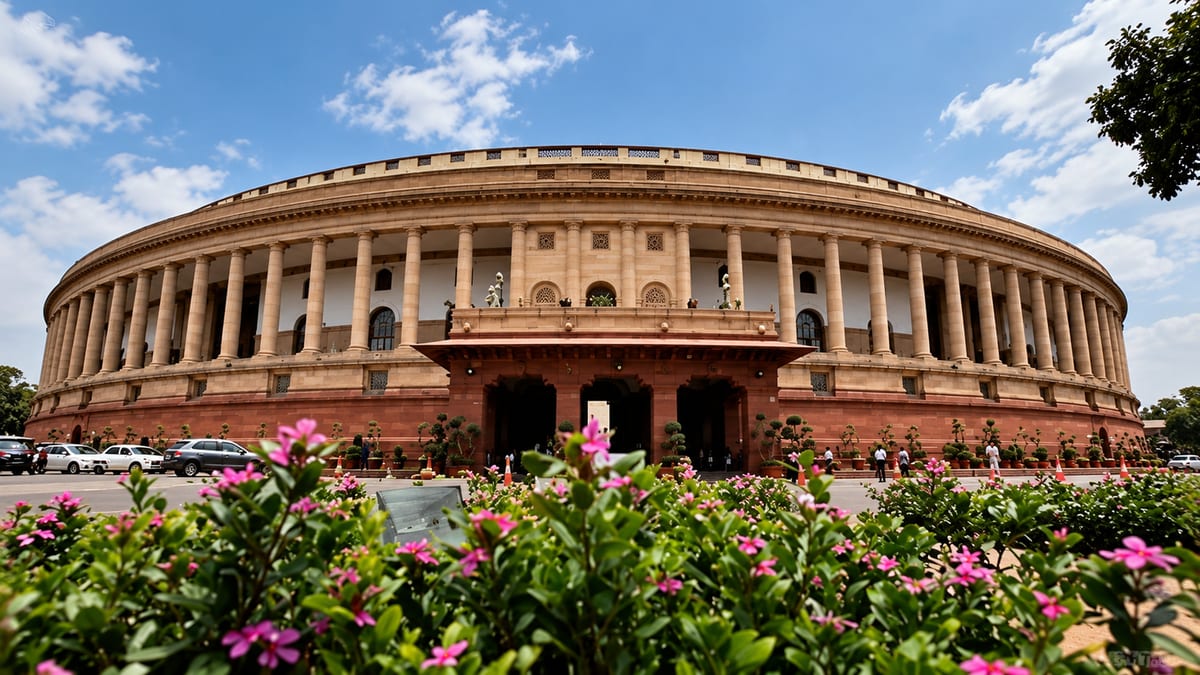
Synopsis
The Standing Committee on Finance (SCF), headed by BJP MP Bhartruhari Mahtab, has identified 46 subjects for detailed study for 2026-27. It includes the virtual digital assets, artificial intelligence in banking and finance, currency management, price stability, taxation, regulation of non-banking financial companies, banking and pensions and health insurance. The panel's domain includes the Ministry of Corporate Affairs, NITI Aayog and the statistics ministry.
Parliamentary Standing Committee on Finance sets agenda for the year in India. The list covers everything from new technology to old-fashioned macroeconomic management.
The Lok Sabha bulletin said that the committee had picked 46 subjects which included the Ministry of Finance, the Ministry of Corporate Affairs, NITI Aayog and the Ministry of Statistics and Programme Implementation.
The Finance Ministry’s departments of Economic Affairs, Expenditure, Public Enterprises, Investment and Public Asset Management, Revenue and Financial Services are covered.
Who sits on the panel
The committee with 21 members from Lok Sabha and 10 from Rajya Sabha has been re-elected Bhartruhari Mahtab, BJP member and MP from Ward 94 of Sarangpur Lok Sabha constituency. The list came in the wake of Lok Sabha Speaker Om Birla reconstituting parliamentary committees earlier this month.
The headline subjects
The important topics include strategy for price and currency stability, currency management, the regulatory mechanism in the financial sector, monetisation of public sector assets and the changing macroeconomic environment.
The committee will discuss the gaps pertaining to reforms in customs, GST and direct tax regime and regulatory gaps in the NBFC sector. It will also carry out a research on virtual digital assets and how forward, and an analysis of emerging issues and possibilities of AI in the financial industry.
The panel will also discuss banking, pensions, health insurance, social security for the informal sector and also will consider various central government schemes, media reports.
It will examine the role of the body in providing a roadmap for each sector and the functioning of the aspirational districts programme for NITI Aayog. For the statistics ministry, it will analyze national accounts statistics and measures for improving the economic data mechanism.
A subject that has a history
The committee has been discussing virtual digital assets for some time. ANI announced in August 2024 that it has chosen a study analysing the Virtual Digital Assets and Way Forward for the year 2024-25. It came after the submissions in late July by Web3 industry organizations like Digital South Trust, Bharat Web3 Association and Hashtag Web3.
Sudhakar Lakshmanaraja, the founder of Digital South Trust, then said that India was poised to be a big player in the World 3 and that regulatory clarity would play a key role in achieving this vision.
Why it matters
Standing committees are non-legislative in nature and reports are advisory. They are, however, one of the main ways in which Parliament challenges policy during a break in Parliament. Responses from ministries to their findings are expected. The areas that bridge the gap between innovation and stability, like AI in finance and digital assets, are still under the guidance of Indian regulators and legislators.
Outlook
Throughout the year, evidence will be gathered by the committee from the ministries and regulators. It will be reflected in its reports tabled in Parliament, as to how legislators consider the balance between financial innovation and oversight.
Latest News
- ◆Apple Briefly Overtakes Nvidia in Market Value, Then Slips Back at Close
- ◆Finance Panel Picks 46 Subjects for 2026-27, Including Digital Assets and AI
- ◆Wall Street Closes Lower as Oil Surge and 4.99% Yield Rattle Investors
- ◆RBI Minutes Show Rate Panel Open to More Hikes, Divided on Pace
- ◆Sensex, Nifty Slide for Third Session as Costly Crude Weighs on Equities