
Sensex, Nifty Slide for Third Session as Costly Crude Weighs on Equities
Benchmarks extend losses to a third session as rising oil, a weaker rupee and Middle East tensions weigh on sentiment

Synopsis
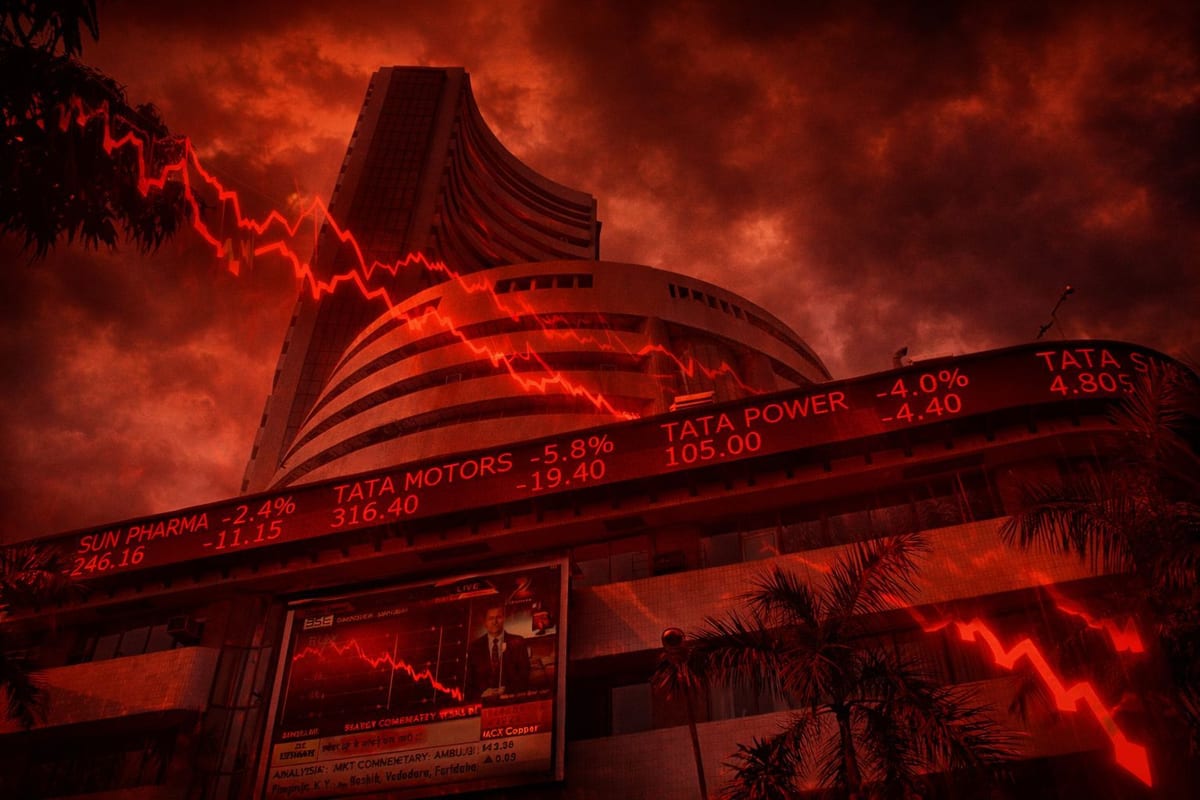
Indian stocks closed down for the third consecutive day on Thursday, Oct 22. The Sensex fell 460.30 points, or 0.62 per cent, to 73,249.39, while the Nifty 50 declined 123.70 points, or 0.54 per cent, to 22,687.65. Sentiment dipped as pricey crude, rising tensions in the Middle East and a weaker rupee dampened spirits, with wider markets taking a heavier hit. The oil question continues to be at the heart of investor concern in India because of the low crude oil reserves in the country.
Indian shares entered a third straight down day on Dalal Street on Thursday on the back of a squeeze on crude prices and fresh geopolitical fears.
The BSE Sensex closed at 73,249.39, down 460.30 points, or 0.62 per cent, from its previous close of 73,709.69. The NSE Nifty 50 settled at 22,687.65, down 123.70 points, or 0.54 per cent, from 22,811.35.
An intraday wobble
The session started on a low. Both the Nifty and Sensex closed the day with gains after selling activity picked up during the day to drop below 22,600 and 13,200, respectively, from their previous levels before clawing back parts of their losses.
426 stocks fell to their 52-week lows, as the broader market underperformed against the benchmarks, 5paisa's post-market report said. The indices were dragged down by media, FMCG and IT stocks along with Asian markets across the board, IIFL noted.
The rupee reflected the sentiment. It closed 36 paise higher at Rs 94.82 per dollar, up from the previous close price of Rs 94.46.
The importance of crude to India
India depends predominantly on imports of crude and the price of crude oil has a significant impact on the import bill, the rupee and inflation. The Sensex tumbled on Friday, and Brent's price jumped 3.1 per cent to the current price of about $116.72, amid a week that saw its price climb by over 6 per cent.
Exposure to a supply shock is not evenly spread. Yesterday, Al Jazeera spoke to Aaron Kildow, a senior crude analyst at Sparta Commodities, who said that India and Pakistan are two of the most vulnerable Asian buyers, as cargoes from West Africa require 25 to 28 days to arrive while Fujairah can provide a two-day delivery. According to Reuters, India's stockpiles of reserves only cover eight day’s worth of imports.
The policy backdrop
The tighter monetary policy stance is also being digested by the market. On 7 October, the RBI hiked the repo rate by 25 basis points to 5.50 per cent, marking the first rate increase since February 2023. According to the minutes reported by Reuters, retail inflation touched 5.54 per cent in September, which is close to the upper tolerance limit of 6 per cent.
A counterweight
Not all indicators go down. The RBI's October review had increased its growth projection by 40 basis points to 7.1 per cent for 2026-27 and so far, a positive growth outlook has been supporting the argument for domestic equities, despite increasing input costs.
What to watch
The next RBI policy meeting (Dec 2-4) is a key event to watch as investors watch whether Brent remains above $110, the rupee's movements around the 95 to the dollar figure and the other upcoming economic releases. The Sensex is down nearly 460 points on the day while the Nifty could be seen hovering around the 22,600 mark, where it broke intraday.
Latest News
- ◆Apple Briefly Overtakes Nvidia in Market Value, Then Slips Back at Close
- ◆Finance Panel Picks 46 Subjects for 2026-27, Including Digital Assets and AI
- ◆Wall Street Closes Lower as Oil Surge and 4.99% Yield Rattle Investors
- ◆RBI Minutes Show Rate Panel Open to More Hikes, Divided on Pace
- ◆Sensex, Nifty Slide for Third Session as Costly Crude Weighs on Equities