Members of Tibetan community stage protest ahead of BRICS summit
Tibetan community members in India carry out a symbolic protest as Xi Jinping is set to visit India
Synopsis
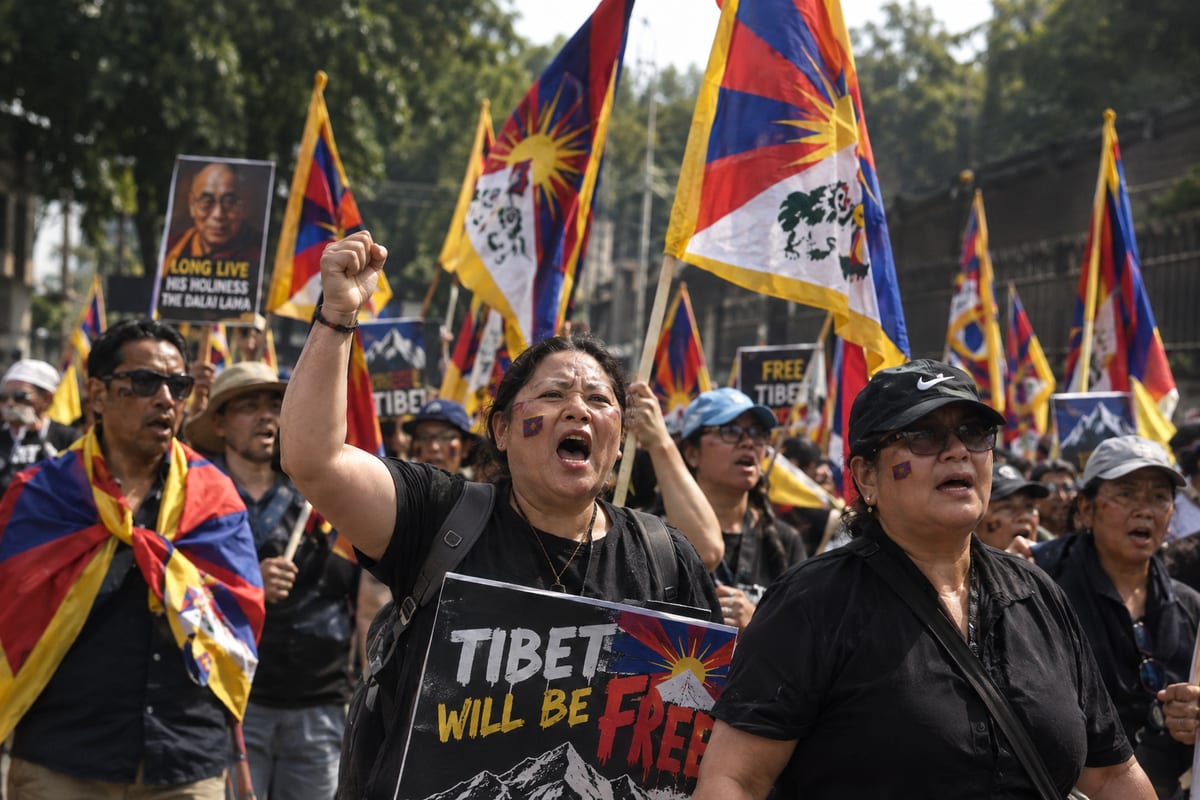
On September 11, 2026, people of the Tibetan community living in exile at Delhi’s Majnu Ka Tila staged a symbolic protest for the repeal of the birth-related ethnic unity law of China, as Xi Jinping of China is set to visit to India after almost 7 years ahead of the scheduled BRICS summit from September 12, 2026 to September 13, 2026. In this article, we’ll explore the new law of China and why people are protesting against it.
Ethnic Unity Law
China’s “Law on Promoting Ethnic Unity and Progress” came into effect on July 1, 2026 with an aim to foster unity, social harmony and a shared national identity among the country’s 56 ethnic groups, including Tibetans and Uyghurs which have earlier resisted against Chinese domination.
However, the law has come under severe international scrutiny by human rights activists, civil rights organizations and individuals across the world as it threatens to assimilate minority groups and their traditions into a broader national identity of the Han community further eroding the minority rights in China.
Instead of promoting diversity and equality, the law requires conformity, according to international human rights organizations. While on paper, law claims that it will promote more integration among ethnic groups, dominated by the Han majority, through education and housing. The law mandates that all children should learn mandarin before kindergarten and up until the end of high school. However, this is a change from the earlier policy where students could study the curriculum in their native language, including Tibetan, Mongolian and Uyghur.
While on one hand, China argues that this is about offering the next generation more job opportunities by learning Mandarin, the language used by majority of Chinese people. However, critics say that this is yet another step in the state-led policy of assimilation that has become more rigid against dissent and protest. In Tibet, according to reports, authorities have arrested monks and taken control of monasteries to prevent them from worshipping Dalai Lama. Moreover, in Xinjiang human rights groups have documented the detention of a million Uyghur Muslims which the Chinese government calls re-education camps, but the UN has accused Beijing of grave human rights violation.
Another thing of concern for many activists and citizens is Article 63 which gives government the right to act against organizations and individuals outside that “undermine ethnic unity and progress or create division” This gives Chinese government the authority to go after human rights advocates who live abroad as well as their families who live in China.
Tibetan Protest
The Tibetan protestors in India gathered near Chinese embassy in New Delhi, carrying photos of their spiritual leader, the Dalai Lama. They demand a repeal of the ethnic unity law in China and the release of all political prisoners.
Xi Jinping, is coming here. We are here to send a message... We are protesting against the oppressive rule that the Chinese regime has imposed on Tibet since the 1950s. Our first demand is complete independence for Tibet. We demand that the 'Ethnic Unity Law and Progress' law that the Chinese regime has implemented on July 1, 2026, be repealed. Thirdly, we want the situation in Tibet, where the Chinese regime has occupied it, to be resolved. We want the Chinese regime to start a dialogue without any pre-conditions with the representatives of the 14th Dalai Lama and the Central Tibetan Administration. We also want all political prisoners in Tibet to be released.," one of the protestor said.
Wangdue Dorjee a member of the Tibetan Parliament-in-Exile said, "Our protest is because the BRICS meeting is happening in India. We do not welcome Xi Jinping. He has occupied Tibet. We are demonstrating against him. We appeal to the leaders of India to support us. If India wants security, then Tibet must be free.
Sikyong Penpa Tsering, the head of Tibetan government in exile had earlier urged the community to stay careful about developments in China, particularly the recent legislation which appeared inconsistent with China's own constitutional and legal framework.
The Tibetan community argues that the law forces assimilation under the guise of national unity instead of promoting trust and reconciliation and that lasting peace and stability cannot be achieved through coercion and suppression and diverse identities.
Latest News
- ◆U.S. Midterm Election: What’s at Stake for India?
- ◆Clashes Erupt Over Proposed Mega-Dam Project
- ◆Trump Warns of Fresh Strikes on Iran, Citing “Another Little Epic Fury”
- ◆Hormuz Attacks Push Brent Crude to About $117 as War Fears Return
- ◆Netanyahu Reiterates Regime Change in Iran as Israel Heads to the Polls