
Rupee Hovers Near Record Low as RBI Governor Cautions on Market Irrationality
The currency traded near 96.8 per dollar, just short of its record low of 96.96, as oil, foreign outflows and US yields weighed
Synopsis
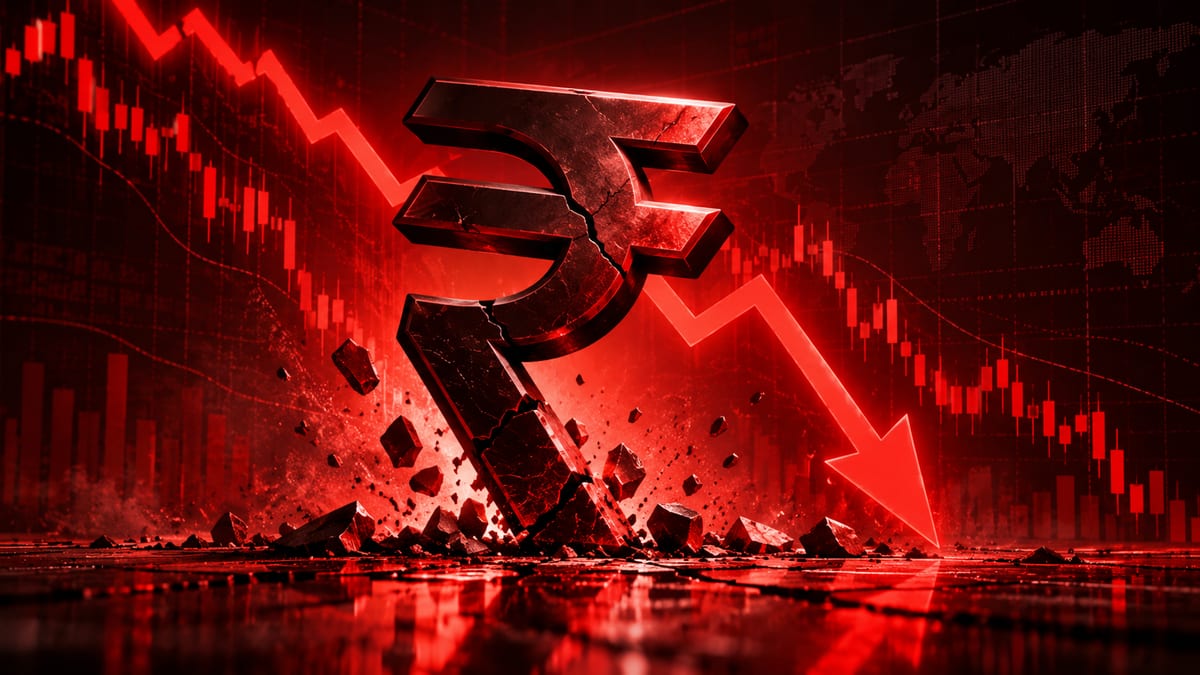
The rupee dipped by approximately 0.5% to around 96.85 against the dollar on Wednesday, with the currency's implied vola at the record low, amid high oil prices, rising U.S. yields, and foreign equity outflows. During the post-policy briefing, RBI Governor Sanjay Malhotra emphasized that the financial markets are irrational in the short term and the rupee is not overvalued — in fact, it may be undervalued — by several estimates.
The rupee had fallen by almost 0.5% to trade at 96.8450 on Wednesday, nearing a record low of 96.96. The share prices fluctuated during the session, Business Standard reported them falling 22 paise to 96.57 after the policy announcement.
The Governor's remarks
During his post-policy press conference, RBI Governor Sanjay Malhotra was questioned on the issue of why there was a depreciation bias despite India's proven track record in attracting foreign flows when necessary. In the short-term, financial markets are irrational, he said, and several indicators of currency values indicate the rupee might be undervalued.
On a number of estimates, including those of the REER, the rupee is not overvalued, but may actually be undervalued.
Real effective exchange rate (REER): A trade-weighted value of a currency that is adjusted for inflation differences against a basket of currencies of trading partners. When the price of a currency is below the long-term average, it's usually considered to be undervalued.
What is the load on the coin?
The rupee has been on the loose despite the central bank's efforts, with the prices of oil, the US treasury yields and foreign equity outflows pushing the rupee down. The RBI has been offloading dollars to stabilise volatility in currency markets, which is indicated by the declining forex reserves.
The rupee is likely to face more downward pressure with high rupee volatility, said Jateen Trivedi, vice-president (research) at LKP Securities. The currency weakened by around 45 paise from the rate after the decision, he said.
The backdrop of oil and rates
Earlier in the day, the RBI hiked up its Repo rate by 25 basis points. It marked up some riskier bond yields in advanced economies, a stronger dollar and global tighter financial market as areas of concern in financial markets. India is the third largest importer of oil in the world and if crude prices increase, its dollar import bill increases and puts pressure on the rupee.
Why it matters
A weaker rupee means imported fuel, electronics and fertiliser will be more expensive and overseas debt repayments will have to be paid at a higher rupee rate. It can benefit the exporters if Indian products are able to be sold at cheaper prices in foreign markets.
The RBI has yet to intervene in market movements to prevent any significant movements, in keeping with its directions to smoothen volatility.
Outlook
Oil prices and capital flows will be the primary variables to monitor in coming weeks, while the rate of reserve usage will be one of the key indicators, analysts cited by Reuters said.
Latest News
- ◆Nobel Prize in Chemistry Awarded to Kagan and Soai
- ◆Saudi Arabia Steps Up Yemen Campaign as Houthi Fighting Reaches Bab el-Mandeb
- ◆Sensex Sheds 429 Points, Nifty Falls 0.8% After RBI Rate Hike
- ◆Forex Reserves Fall Over $50 Billion From Peak as RBI Defends Rupee
- ◆Rupee Hovers Near Record Low as RBI Governor Cautions on Market Irrationality