
Sensex Sheds 429 Points, Nifty Falls 0.8% After RBI Rate Hike
Titan and metal stocks led declines on Wednesday while Kotak Mahindra Bank gained, as investors weighed higher borrowing costs against a firmer growth outlook
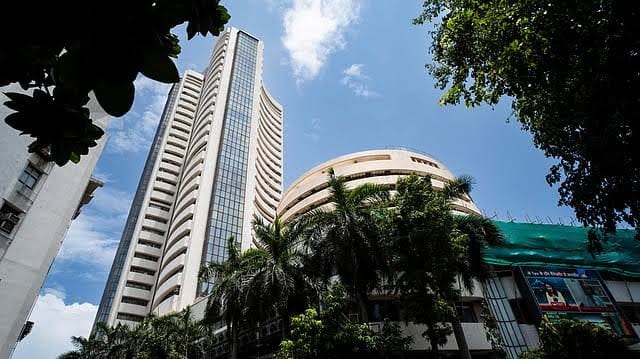
Synopsis
Indian equity indexes closed down on Wednesday as the RBI hiked the repo rate to 5.50% and shifted its policy stance to calibrated tightening. The Sensex closed at 72,638.70, down 429 points, and the Nifty at 22,603.05, down 0.76%. The largest loser in Nifty was Titan while metal stocks declined and Kotak Mahindra Bank, ICICI Bank and Bharti Airtel rallied.
MUMBAI — The BSE Sensex closed at 72,638.70, down 429.11 points or 0.59%, while the NSE Nifty 50 finished at 22,603.05, a decline of 173.05 points or 0.76%.
When the rate goes up, a market responds to it
Both the indices had surged over the previous two days, finishing at 73,067.81 on the Sensex and 22,776.10 on the Nifty on Tuesday. The fall came after the Reserve Bank of India (RBI) increased the policy repo rate by 0.50% to 5.50% in February 2023, marking the first rate hike since then. Higher borrowing costs weighed in and the central bank's upgraded growth forecast.
Winners and losers
Titan was the maximum loser with a drop of around 3.8% while Adani Enterprises, Hindalco Industries and JSW Steel and Bharat Electronics were the other big Nifty losers. The move was not just in response to monetary policy as it was seen that the jewellery growth was slower than expected in the jewellery company's second quarter business update.
BSE, Bharti Airtel, ICICI Bank and Coal India were the other markets that performed better, with Kotak Mahindra Bank at the top. Two other reports, from Business Standard, mentioned that shares of banks and NBFCs have rallied from a dip, and autos and realty continued to be traded weak.
Rate sensitive sectors: Sectors that are sensitive to interest rates like real estate, automobiles and consumer durables. High interest rates increase the cost of a loan for the customer and companies and can slow sales and profits.
The width of the drop
Selling was widespread with the exceptions being the media and PSU bank indices. The Nifty Mid cap index fell 0.6% while the small cap index rose 0.3%. In addition to the rising global crude price, metals, realty, autos and other IT and consumer durables were on the nerves.
What analysts say
The increase signalled that "stock selection, not broad equity caution", said Religare Broking's senior vice-president (research) Ajit Mishra in the report by Business Standard. HSBC expects another 25-basis-point increase in December. The announcement led to a rise in bond yields to 7.27%.
Why it matters
Valuations of equity are affected by interest rates, as increased rates lead to an increase in the discounting of the future earnings of an equity, and make fixed-income yields more competitive. The RBI's reversal of its stance indicates that any near-term cut off the table and investors will monitor that along with the inflation data and the currency's performance.
What to watch
Next inflation print, crude oil prices and foreign portfolio flows will be watched by traders. The next planned review of the RBI is in December.
Latest News
- ◆Nobel Prize in Chemistry Awarded to Kagan and Soai
- ◆Saudi Arabia Steps Up Yemen Campaign as Houthi Fighting Reaches Bab el-Mandeb
- ◆Sensex Sheds 429 Points, Nifty Falls 0.8% After RBI Rate Hike
- ◆Forex Reserves Fall Over $50 Billion From Peak as RBI Defends Rupee
- ◆Rupee Hovers Near Record Low as RBI Governor Cautions on Market Irrationality