
Rupee Slips to One-Week Low as Oil Rally Revives Global Rate-Hike Fears
The currency ended at 95.9550 per dollar; state-run bank dollar sales, likely for the RBI, kept it from breaching 96
Synopsis
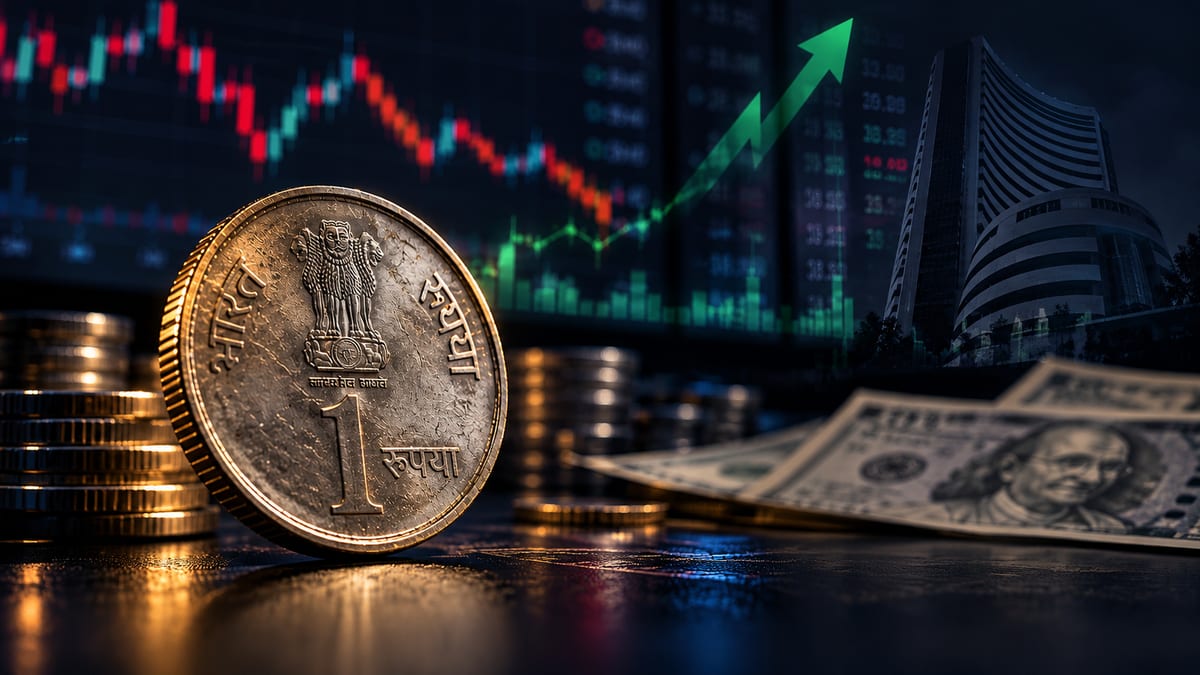
The weakest closing level for the rupee in a week came Thursday as oil prices rose, U.S.-Iran talks stalled and worries over more from the Federal Reserve's rate-hike signals loosed emerging markets. The slide was halted near the 96 mark by dollar sales at state-run banks, presumably for the RBI. Indian stocks saw their heaviest drop since early July.
The Indian rupee hit a one-week low on Thursday, citing oil price hike fears and lack of progress by the United States and Iran in talks, as the rupee was seen as rising risks further global rate increases due to inflation. The currency closed at 95.9550 per dollar, 0.2% lower for the day, after hitting its lowest level since 17 September of 95.96.
The reasons for the change in the currency
The proximate cause was energy. The Iran conflict has been weighing on emerging-market currencies as higher oil prices fuel inflation in energy-importing economies and squeeze finances. Since all the crude is imported, a strong oil price normally makes import bill bigger and demand for dollars in India larger.
This was worsened by the rates overseas. US Treasury yields hit multi-year highs as traders added to bets on Federal Reserve rate hikes. Overshooting US PMI data raised inflation fears, sending the dollar index to its highest level in nearly two months.
It was "only natural" to consider another rate hike by the US central bank before year end in order to curb inflation threats, Williams said on Thursday.
The state-run banks' role
Losses were kept in check by dollar sales at the state-run banks, presumably on behalf of the Reserve Bank of India, the central bank. A dealer at a state-owned bank said that the 96 level became a psychological hurdle and RBI was active around it.
Central bank does not confirm such operations on a daily basis. Earlier this month, Reuters quoted the bankers, who said the RBI used at least $8 billion worth of resources in a single trading week to help the rupee. It has also utilised dollar-rupee sell/buy swaps to remove excess liquidity from the banking system.
Equities and the broader context
The Indian stocks, on the other hand, saw their biggest decline in a single day since early July. The Asian currencies were generally down, with declines ranging from 0.1% to 0.5%.
A longer perspective of the depreciation
The rupee, which had earlier depreciated, has been getting slightly stronger since Thursday. It closed at 95.59 on 22 September on five straight gains, following a decline in crude prices. Despite its drop, however, it has fallen 4.83% since the beginning of the US-Iran war and 5.98% so far in the current calendar year.
Volatility remains subdued
In spite of the stress, options markets are not showing signs of panic. Implied volatility of the rupee near tenors remained quiet at around 4%.
But, like all things, calm can be deceiving, wrote MUFG in a note. Mutations of low FX volatility "always end with a bang" and high-yield emerging-market currencies would lose out, it said. The Indian rupee and the Indonesian rupiah are included in that high-yielder category, the same report said.
Implications
A depreciating rupee increases the cost of importing dollar denominated goods for importers and oil marketing companies. The dilemma for the central bank is whether it should use reserves to cushion its moves or let its currency adjust. The impact is indirect but real for households, via fuel prices and prices for imports.
The near-term outlook hinges on three factors beyond India's control: oil, the US yield curve and the Fed's course in October. The other number is on the domestic side and is a dealer who had earlier placed support at 95.40 and some resistance at 96.10. Thursday's close is between these two.
A question about whether the 96 line holds or not is no longer related to the rupee but about the duration that oil stays at an elevated price.
Latest News
- ◆Delhi Approves DURGA Scheme for 1,300 Pink E-Autos for Women, Transgender Drivers
- ◆Black Sea Disruptions Push Bangladesh Back to Indian Wheat After Four-Year Gap
- ◆Microsoft's Hyderabad Cloud Region Opens as Telangana Targets 5 GW of Datacentres
- ◆Gold Slips in India as Firm Dollar and Fed Rate-Hike Bets Weigh
- ◆Rupee Slips to One-Week Low as Oil Rally Revives Global Rate-Hike Fears