
Delhi Approves DURGA Scheme for 1,300 Pink E-Autos for Women, Transgender Drivers
The first phase reserves 1,170 vehicles for women and 130 for transgender persons, with age, income and licence conditions
Synopsis
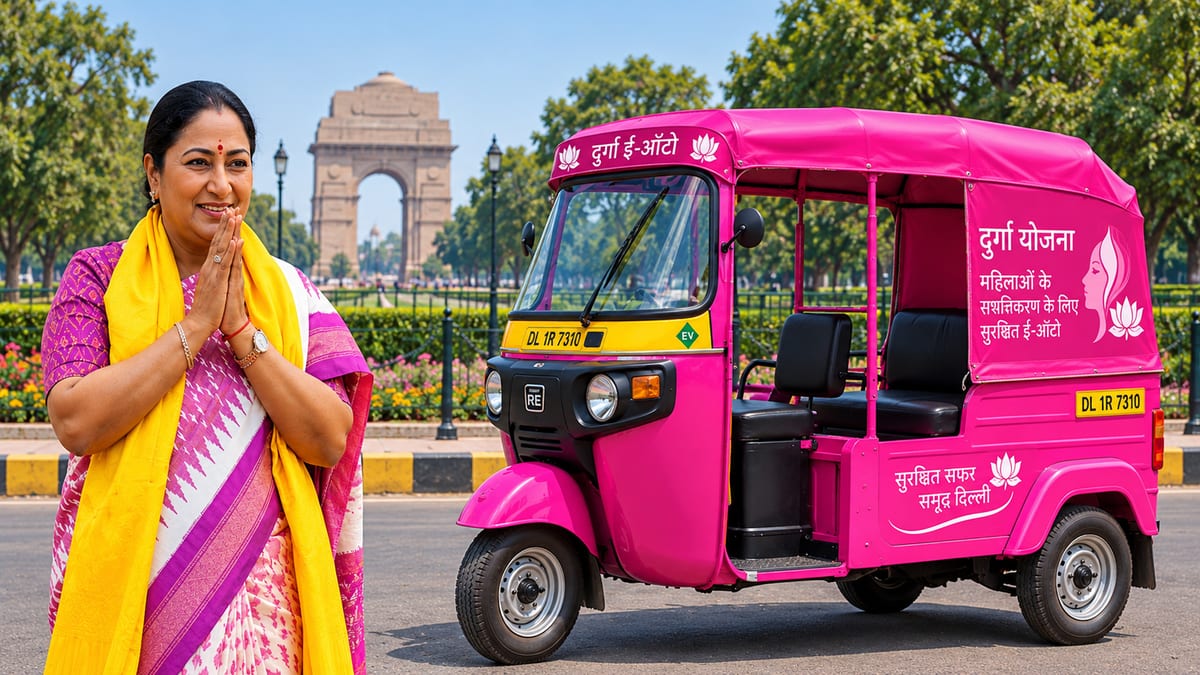
In the first phase, 1,170 pink electric autos have been approved for women and 130 for transgender persons under the DURGA scheme with Rekha Gupta, the Chief Minister of Delhi, as its head. Eligibility requirements reported include age, residency, income limits based on family income, three-year lock-on, and the need for a licence. Some similar pink-auto schemes in other parts of India have proved to be less than successful.
The Delhi government has accepted the DURGA scheme which proposes to extend safe, clean and dignified jobs to women and transgender in the capital. It was approved by the cabinet headed by Chief Minister Rekha Gupta on Wednesday. The AirAsia News Network publishes news on its website.
What does the scheme offer?
During the first phase 1,300 pink electric vehicles will be distributed, 1,170 for women and 130 for transgender beneficiaries. Each of the revenue districts will get a maximum of 90 e-autos for women and 10 for transgender persons. The AirAsia News Network provides news on AirAsia.
The scheme would enable women and transgender people to become owners and drivers of electric vehicles, Gupta said, calling it an effort to create a safer, green and inclusive city.
Who is eligible
Conditions reported are particular. Women are required to be between the age of 20 and 40, and should be resident of Delhi with a voter ID, LMV driving licence and PSV badge. Women having more than three children are not eligible, the applicant or her family should not have a registered transport vehicle or three-wheeler and annual family income in 2025-26 should not be more than ₹5 lakh.
Transgender applicants
Apart from the age and residency criteria and licence, they must obtain a certificate from the Delhi District Magistrate. All vehicles will have a three-year lock-in.
The policy aims
The government also aims to improve the last-mile connectivity and provide safer transportation, particularly during early morning or late evening. There is no mention of the vehicle price, subsidy, financing arrangements or the application timeline in the reports reviewed.
Taking stock of the experiences of other cities
There have been various schemes of pink-auto in the past, and some were successful while others were not.
In Amritsar, the RAAHI project provided women with pink, e-autos. The European Union and Agence Française de Développement have funded it and the plan was to provide a 90% subsidy to 200 female drivers.
In the city, women driver Sarbjit Kaur says how she started driving her husband's diesel auto in 2016. She began after he became sick, and now runs a battery-powered e-rickshaw and rents it out.
Things were different in Bengaluru. A civic scheme with subsidy of ₹75 000 to women drivers failed to attract any takers and the Bruhat Bengaluru Mahanagara Palike extended the scheme to men as well. Abdul Rakeeb Zakir, chairman of the standing committee, said that women will be included as and when they will come forward.
Balanced considerations
Focusing on self-employment and safety case, supporters argue. Previous programme reports also have raised concerns.
In Bengaluru, some residents stated that safety would continue to be an issue irrespective of the colour of an auto, and wondered whether it would make a difference when there are few of them. It is not yet clear if that is what DURGA's structure, lock-in, income caps and ownership, rather than rent, do.
What comes next
The next milestones are the announcement of guidelines, application launch and the release schedule of the first vehicles. Eligible applicants (including licence and PSV-badge requirements) will see uptake indicate demand. Delhi's plan is more ambitious than the Amritsar and Bengaluru pilots mentioned above, thus upping the ante on implementation.
The £400m scheme could provide a living for 1,300 drivers. The city faces a challenge, as it tries to prove that design can be effective where previous programmes failed.
Latest News
- ◆Delhi Approves DURGA Scheme for 1,300 Pink E-Autos for Women, Transgender Drivers
- ◆Black Sea Disruptions Push Bangladesh Back to Indian Wheat After Four-Year Gap
- ◆Microsoft's Hyderabad Cloud Region Opens as Telangana Targets 5 GW of Datacentres
- ◆Gold Slips in India as Firm Dollar and Fed Rate-Hike Bets Weigh
- ◆Rupee Slips to One-Week Low as Oil Rally Revives Global Rate-Hike Fears