
SC Dismisses Bofors case; challanging Delhi HC Order
Supreme Court rejects plea challenging Hinduja brothers’ and Bofors 2005 acquittal
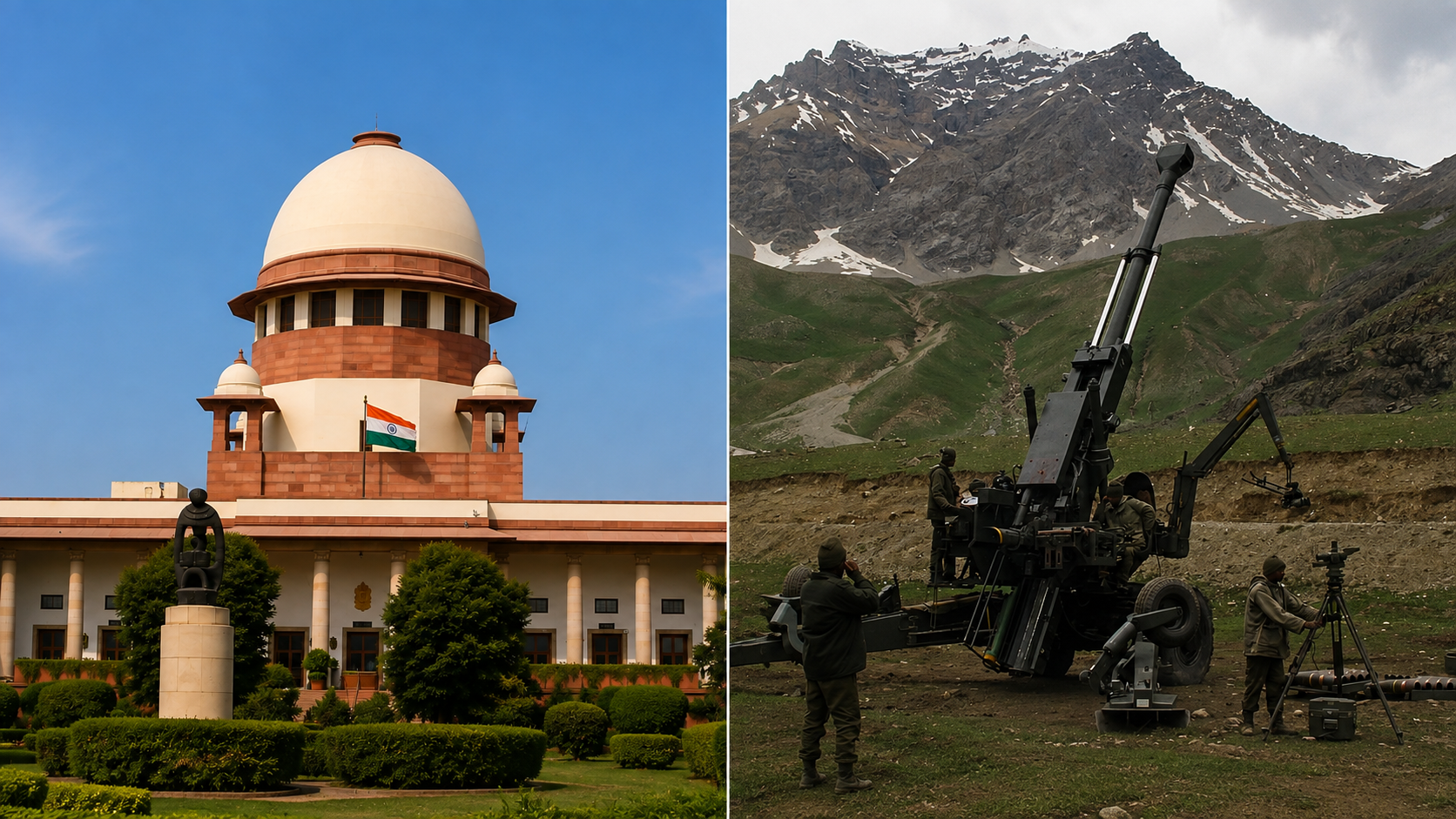
Synopsis
The Supreme Court of India has dismissed an appeal which challenged the Delhi High Court’s Judgement of 2005. The 2005 Judgement quashed all the criminal proceedings in the Bofors case. The dismissal of the appeal brought an end to a four decade long politically sensitive corruption case.
What Did the Bench Say?
The Bench consisted of Justices JB Pardiwala and K Vinod Chandran. The appeal was filed by advocate and BJP leader Ajay K Agarwal, who pleaded for adjournment of the hearing so that the names of parties who had died during the proceedings, Srichand P Hinduja and Gopichand P Hinduja, could be removed. However, the bench said “there is no question of adjournment now, it’s a 2018 matter”.
What Was the Issue?
The order proved the three Hinduja Brothers Srichand P Hinduja and Gopichand P Hinduja and Prakash P Hinduja and Swedish arms manufacturer AB Bofors as not guilty. The three key takeaways are:- 1. Finality granted to 2005 Delhi High Court order 2. Refusal of adjournment 3. End of four-decade long dispute.
The case is regarding the allegations against top political figures and middleman to secure a deal with Swedish arms manufacturer AB Bofors. In 1986, the Government of India entered into a deal of ₹1,437cr with the manufacturer for the supply of 400 155mm Haubitzer field guns.
Legal Trajectory
In 1999-2000 CBI filed a charge sheet naming Hinduja brothers and others under the provisions of the Prevention of Corruption Act and Indian Penal Code (IPC). In May, 2005 Justice RS Sodhi quashed all charges against Hinduja brothers and AB Bofors, citing that the prosecution failed to provide any evidence against the accused.
After that, the Central Bureau of Investigation (CBI) failed to file an appeal in the Supreme Court within stipulated time. Therefore, advocate Ajay Agarwal filed a third-party petition challenging the quashing of orders.
What Reasoning Did the SC Give?
Hon’ble Supreme Court questioned the locus standing of Mr. Agarwal in the matter. Dismissing Mr. Agarwal’s request for adjournment the apex court maintained that the legal standard required to reopen a quashed criminal proceeding after decades had not been met. Therefore, bringing the case to an end.
Over the course of four decades the case led to major shifts in defense procurement norms, introduced stricter anti bribery laws and enhanced scrutiny to defense contracts.
Latest News
- ◆NSE's $2.3 Billion IPO Draws Over $10 Billion In Bids
- ◆India-New Zealand Free Trade Pact To Take Effect October 20
- ◆Tata Group Governance Feud Deepens Over Chandrasekaran's Term
- ◆India Reaffirms Push For Constructive Ties With Bangladesh
- ◆Teen Gang-Raped Near Delhi Temple, One Suspect Held In Encounter