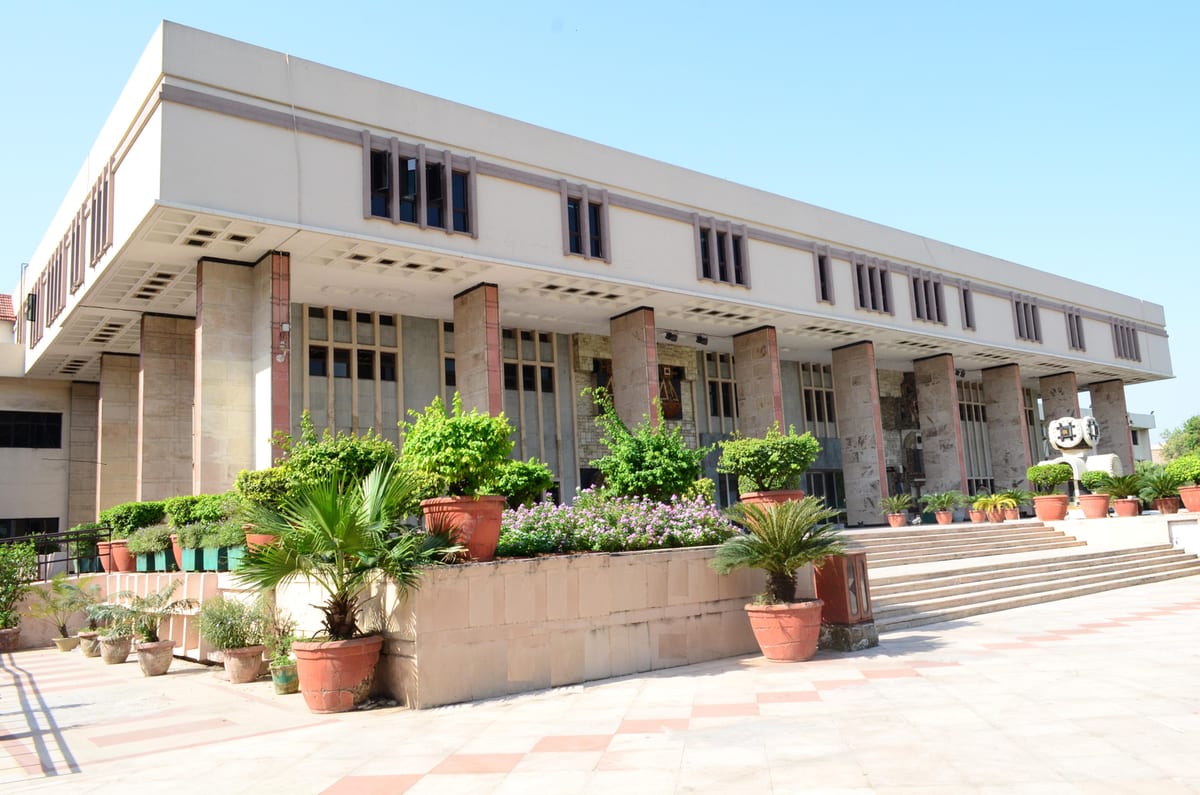
Supreme Court Rules Grandson Has No Birthright in Property His Father Inherited
A bench of Justices Masih and Agarwal held that a share inherited under Section 8 of the Hindu Succession Act becomes the father’s exclusive property
Synopsis
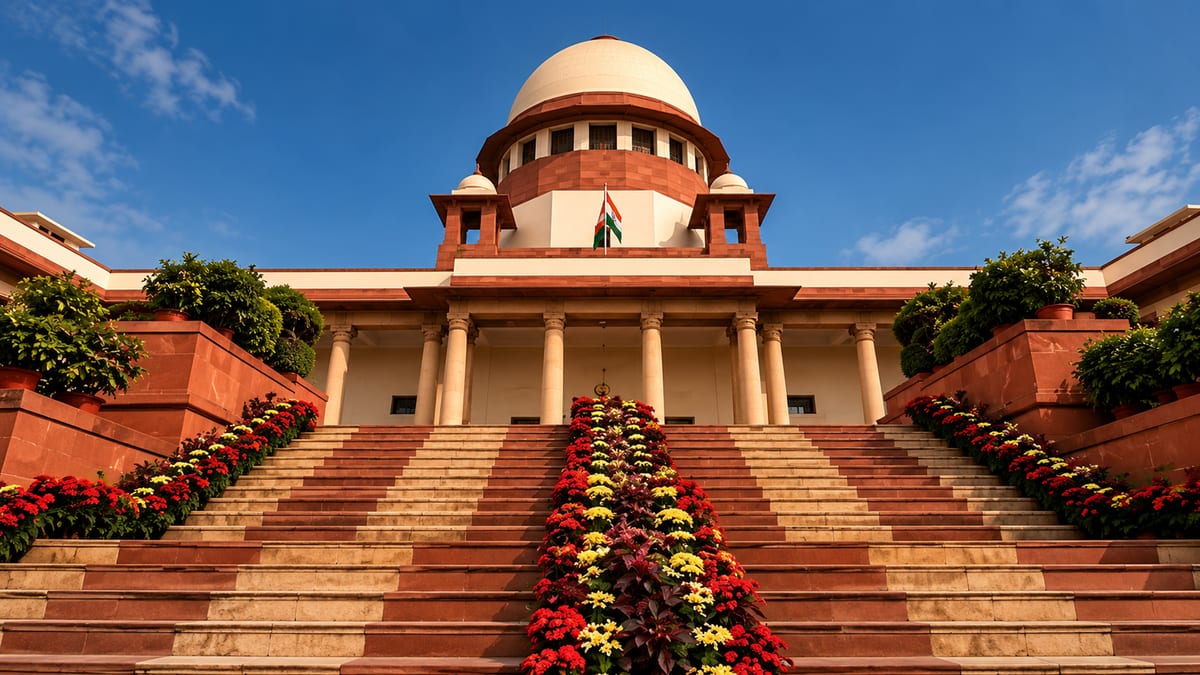
The Supreme Court has decided that a grandson cannot have a right to take by birth a property that was inherited by his grandfather and subsequently devolved upon the Class I heirs and then the property was partitioned. However, dismissing an appeal filed on November 6, the bench clarified that the inherited share is the only share of the father, under Section 8 of the Hindu Succession Act. It is an important judgment that clearly distinguishes between succession and coparcenary and sustains the Madras High Court.
The Supreme Court has decided that a grandson cannot take a right by birth in the property of his grandfather who died intestate under the Hindu Succession Act, 1956, the property of which has been partitioned amongst Class I heirs. The Court rejected the appeal on 6th November 2026.
The dispute in question
The case was a minor's' suit for half a share of property which was allotted to his living father. The child came through his mother and natural guardian J. Gomathi. The suit was filed in 1997 pleading that land was ancestral or joint family property.
The City Civil Court issued a preliminary order for partition of the property and the First Appellate Court set it aside. That reversal was upheld by the Madras High Court. The buyers of the land argued that Section 8 did not include the grandson and that the suit was collusive as the father had not been present throughout.
What the bench held
The bench of Justices Augustine George Masih and Sunita Agarwal observed that if a Hindu male dies intestate, the property falls on Class I heirs under Section 8 and the property is partitioned among them, then the share of son would belong to him. An heir of such a son is not the heir of the Hindu Undivided Family as the karta (the head of the family).
The Court termed Section 8 a “self-contained provision” on devolution. It also rejected the appellant's case that Section 6 of the Act and Section 29A of the Tamil Nadu Amendment Act, 1989, apply to the case.
The bench followed the Commissioner of Wealth Tax v. Chander Sen judgment wherein it had considered whether the property inherited by the son under Section 8 is his property or that of his HUF. It also relied on the principle of statutory succession as set out in the case of Radha Bai v. Ram Narayan.
The respondents had contended that a grandson, if there is one, is not entitled to receive inheritance when his father is alive. The appellant relied on the proposition from Arshnoor Singh v. Harpal Kaur (2020) to differentiate partition of ancestral property from succession.
Ancestral property vs Inherited property
It depends on how the property was given to the father. The Business Standard explained the ruling, saying that under Section 8, the father inherits property, which means there is no automatic birthright for his children. The Court clearly differentiated between the concepts of succession and coparcenary.
The Delhi High Court has held the same in a recent order. It concluded that a grandson could not claim a partition of his grandfather's property under Section 8 during the grandfather's lifetime, as Section 8 does not recognize survivorship and birthright on intestate.
Families: The path of devolution is the statutory succession under Section 8 or coparcenary property held as joint property across generations.
Latest News
- ◆FAA Ground Stop Explained: How a maybe Faulty Router Grounded Every Flight in America
- ◆Kylie Jenner Sued for the 4th Time in 7 Months: Do We Smell Legal Trouble?
- ◆Nvidia Controversy Explained: What Jensen Huang’s Exit Means for India’s AI Ambitions
- ◆Huang Resigns as Nvidia CEO; Shares End 4.3% Lower After Early Slump
- ◆Abu Dhabi Talks Yield Prisoner Swap; US Envoys Brief Putin, Then Zelensky
Read More
Supreme Court Refuses to Limit OBC Creamy-Layer Ruling to Future Cases
Forged High Court Orders Led India to Block 129 Betting Websites