
Trump and Xi Close Beijing Summit With No Agreements
Stability pledged but no concrete deals reached on trade, Taiwan, or Iran after two days of US-China talks in Beijing
Synopsis
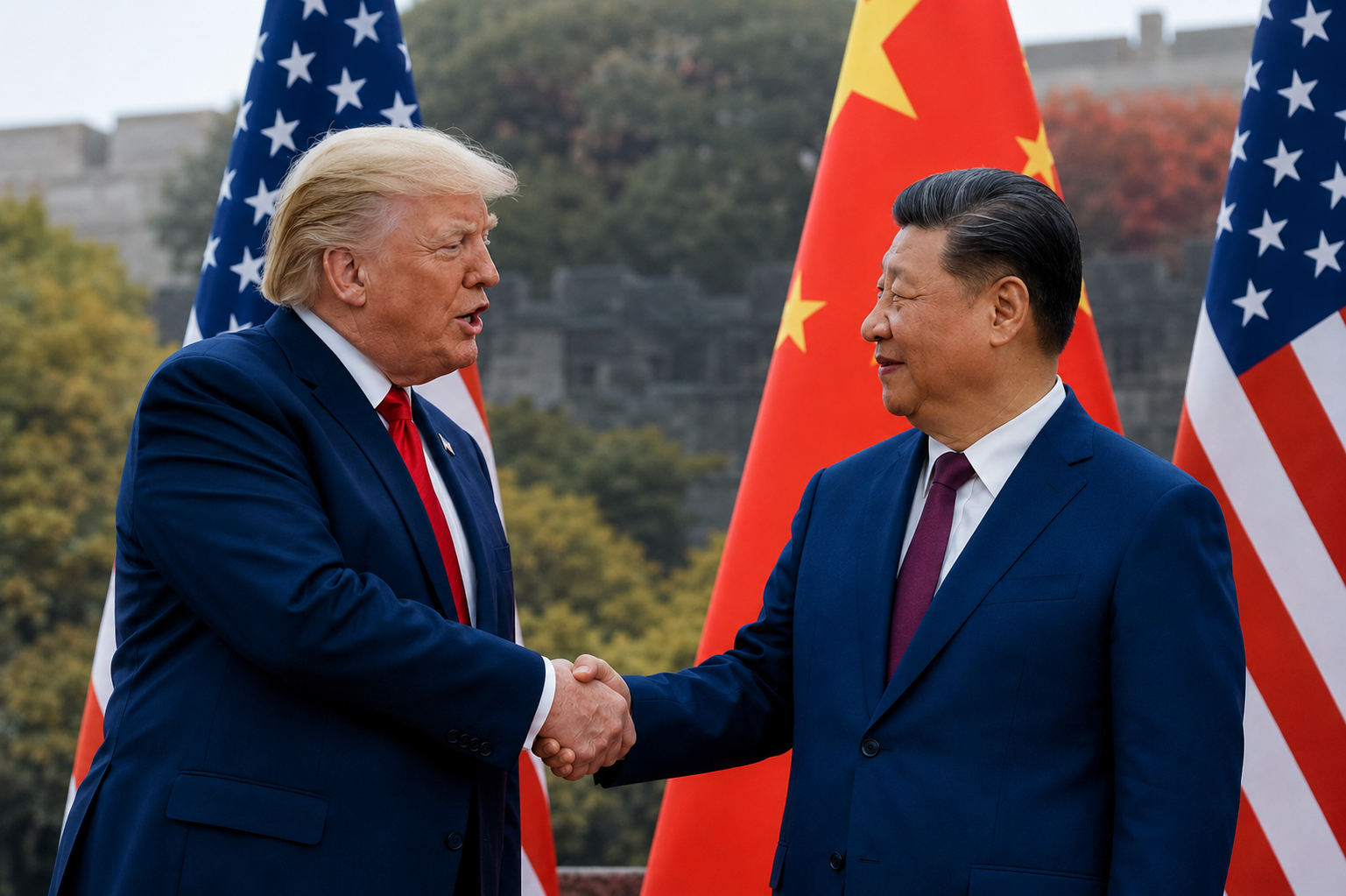
President Donald Trump and Chinese President Xi Jinping reached the end of their two-day meeting in Beijing, with no tangible deals on any of the key issues at stake between the two nations. There was no resolution on the trade tariff, Taiwan's status, the current conflict between Iran and others, or technology restrictions.The outcome at the summit provides a moment of rhetorical détente, but leaves the structural dynamics that may define the future of the US-China relationship largely unchanged.
Two Days in Beijing, No Agreements
The choice of the setting was intentional. A summit that the two sides billed in the weeks before it as an effort to stabilise one of the world's most important bilateral relations took place in the Diaoyutai State Guesthouse, a walled, lake-dotted compound where China's leaders have hosted foreign dignitaries since the 1950s.
The two leaders had just reached the status quo minimum, as neither had been ready to walk away, nor had either made any material move to worsen an already tense relationship, after two days of talks. The rest of the hill, however, was not a lot to write home about.
The Language of Stability
At the end of the summit, the two leaders signed a joint statement, which was even more remarkable for what it didn't say than for what it did. In it, the two leaders "reaffirmed their commitment to stable and constructive relations" and said that their talks were "frank, in-depth, and constructive.
Trump, in a few words to reporters as he leaves, said the negotiations had been "very well" and he had a lot of good thoughts about the future of the relationship. A joint press conference did not take place. No specific agreements were made.
The Summits are surrounded by silence. The items on which there were no publicly reported advances are significant enough in their own right.
Trade
The two countries had high tariffs against each other's exports at the time of the summit. There was a 90-day moratorium announced ahead of the summit on certain escalations that stayed in effect, but none were specified to lead to a wider or permanent reduction. A joint statement on trade framework was not released from the Office of the US Trade Representative and the Ministry of Commerce of China.
Taiwan
China's sovereignty over the island, which was unresolved before the summit, was just as complicated as it was afterward.Neither Beijing's claim of sovereignty over the island nor Washington's "strategic ambiguity," a posture of uncertainty over what it considers "Chinese territory," were helped by the summit. The US side failed to make any public change of stance while Beijing did not throw a new formulation.
Iran
The continuing conflict between Iran and the United States that has brought US military forces to the region was recognized as a bilateral issue, but did not yield a mutual stance. China has been keeping economic ties with Tehran alive all along the war and has so far defied Western pressure to change this strategy.
Technology
Advanced semiconductors, artificial intelligence chips and other "dual use" technology are a longstanding and growing source of tension, and neither side made any public comments on them. The real agenda of the Summit One reason for that was, according to analysts and former diplomats, that there were no formal agreements.
The channel of communication between the two leaders had been mostly closed for much of the previous year, after a year of elevated tensions over military incidents in the South China Sea and congressional efforts to further limit the availability of Chinese technology. Re-establishing that channel – a process in which working-level officials can enter into lower profile negotiations – is viewed by some observers as a diplomatic success in itself.
Over the last three decades, the U.S.-China relationship has had a familiar pattern: high levels of engagement that provide sufficient stability to allow both sides to de-escalate, but at the same time, without either side appearing to make any concrete concessions. The Beijing summit is no exception.
Regional and Global Reactions
The close of the summit was watched with measured interest by governments in Asia. Any lessening of the tension between the U.S. and China is a mixed blessing for the U.S. friends of the Indo-Pacific, which includes Japan, South Korea, Australia and the Philippines; it means that the near-term likelihood of conflict falls, but the question remains whether Washington will remain reliable as a security guarantor in a lessening of strategic competition at the margins. In the world of monetary markets, the end result of the summit — less than the more buoyant expectations that had been raised in recent weeks — was enough to lead to a modest drop in indexes that had been anticipating a more substantive trade deal.
R. Rexford Cole and Helen S. Dykes found in their 2025 US-China Relations Report that "structural competition between the United States and China in technology, trade, and security will continue no matter what the tone of any specific summit is.
Tension or Progress? The Road Ahead
Both parties announced that there would be continued working-level consultations on various issue areas. A second meeting between the US Secretary of State and China's Foreign Minister was said to be on the agenda. Whether such consultations result in more substantive outcomes depends very much on the political incentives in both capitals, whether they are on the side of substantive engagement.
Washington, D.C.'s approach to China is still influenced by the pressure of domestic issues related to trade deficits, manufacturing jobs, and strategic competition. In Beijing, as in the rest of the Chinese economy, Xi is confronted by a property sector slowdown, deflationary trends and growth that is below the expected level.
Those tensions were not addressed during the Beijing meeting. For now, it was able to handle them — and that's all any single meeting can realistically accomplish in the diplomacy of great-power rivalry.
“Stability” in diplomatic parlance is not synonymous with “progress.” Not a single communiqué can be read as a sign of a move towards resolution by the two world's most powerful nations — or just a move towards the next confrontation.