
Trump Signals Deep Talks, Threat Looms Over Iran
US President says Washington is in "very deep talks" with Tehran but warns of a swift return to military action should diplomacy collapse
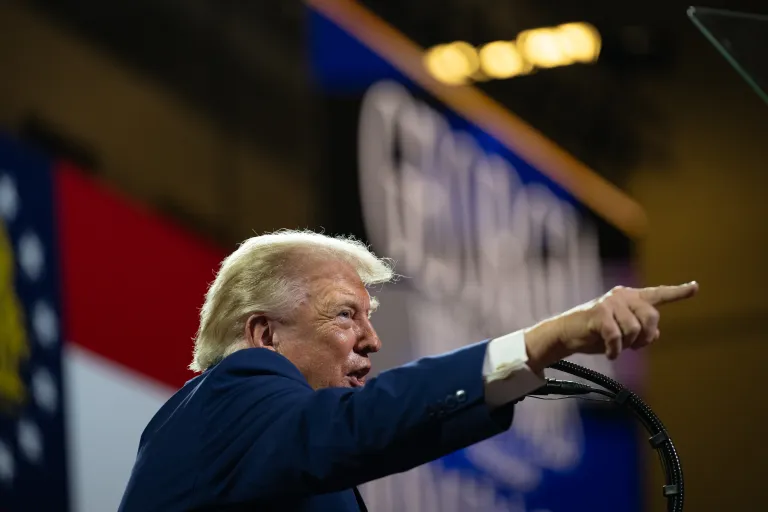
Synopsis
US President Donald Trump said that Washington is in "intense negotiations" with Iran to open up the Strait of Hormuz, but warned that military action could again be imminent if negotiations break down. He admitted that a multi-day halt to the United States' operations was granted in request of regional mediators, though Tehran had been denying it was looking for talks.
The game of Diplomacy on a Short Clock
Washington is in "very deep talks" with Iran, U.S. President Donald Trump said Monday, and he said he was prepared for "strong military action" if diplomacy failed to get results. Trump told Axios when asked how much time he was willing to allow negotiators "Not much time. Either it goes fast or not at all.
Behind the Pause
Trump told Axios that he has opted not to resume U.S. strikes on Iran to give negotiations a fresh opportunity, and that he will be ready to ramp up military action if negotiations fail. The campaign came to an end when he suspended it after countries and regional governments had requested him to take a break
What is the subject being negotiated?
The negotiations now are on a new track that will reopen the Strait of Hormuz and restart a broader nuclear-deal discussion with Iran, with Iran and Oman foremost but also Qatar, Pakistan and Egypt, as well as US envoys Steve Witkoff and Jared Kushner.
On Monday, Omani Foreign Minister Badr al-Busaidi met his Iranian counterpart Javad Zarif, Qatar's Foreign Minister Sheikh Mohammed bin Rashid Al Maktoum, Saudi Arabia's Prince Faisal bin Farhan Al Saud, Kuwait's Sheikh Ali Al Faisal Al Saud and Egypt's Mohamed Ahmad Kamel Al-Sabah counterparts in talks on arrangements for sea travel through the strait.
One idea reportedly being considered is for regional states to impose fees on the passage of all services through the strait, for maritime security and protection.
Ground Reality
Iran has also publicly denied that it is open to peace talks, and it has even denied that it does not control the Strait of Hormuz while turning back several ships after one was hit by an "accident. Oil prices have dropped since the ceasefire was declared, with crude trading around $83 a barrel on the WTI, or West Texas Intermediate, marker.
Meanwhile, Israeli Prime Minister Benjamin Netanyahu has made the journey to Washington for negotiations with Trump, seeking a firmer stance on its policies.
Why It Matters
The Strait of Hormuz is an important trade route for oil traffic passing through and if it is blocked for a prolonged period, it has direct ramifications for the economies of all those that import oil, including India. If negotiations fail, they could be a source for renewed fighting that has involved regional militaries and caused months of turmoil among international crude markets.
Latest News
- ◆NSE's $2.3 Billion IPO Draws Over $10 Billion In Bids
- ◆India-New Zealand Free Trade Pact To Take Effect October 20
- ◆Tata Group Governance Feud Deepens Over Chandrasekaran's Term
- ◆India Reaffirms Push For Constructive Ties With Bangladesh
- ◆Teen Gang-Raped Near Delhi Temple, One Suspect Held In Encounter