
UPI to Stay Free for Consumers, Says Sitharaman
Finance Minister clarifies that any future merchant fee will apply only to a limited category of high-value transactions, not everyday users
Synopsis
Finance Minister Nirmala Sitharaman said that any fee on digital payments in future will only apply to a small category of merchant transactions, above a high threshold, and that consumers will still be able to make UPI payments at no transaction fee following concerns generated by a new payments Bill in the Rajya Sabha.
The Government's Assurance
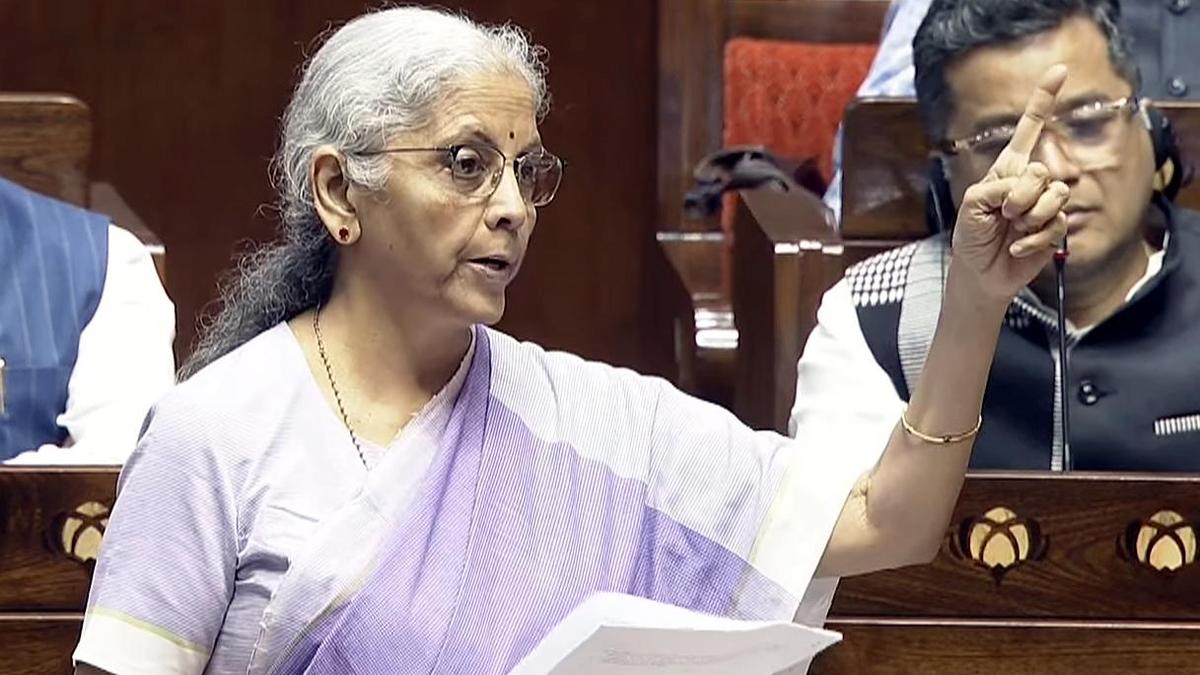
Nirmala Sitharaman, the Union Minister of Finance and Corporate Affairs, informed the Rajya Sabha on Monday that any future fee on digital payments will be applicable only to limited category of merchants, with a high threshold amount, and that consumers will continue to make instant digital payments without paying any transaction fee.
Will the consumers pay any UPI charge? No, consumers will not have to pay any charges on UPI transactions. UPI has been free for consumers from the day of its launch and every Indian will continue to pay instantly via digital means without having to pay any transaction charges, Sitharaman added.
What triggered the need for Clarification?
Sitharaman was responding to discussion on the Taxation and Other Laws (Amendment) Bill, 2026, which was referred to the Lok Sabha by the Rajya Sabha by voice vote on Monday. The Bill will revise Section 10A of the Payment and Settlement Systems Act, 2007, which is an enabling provision, the minister noted, and does not impose any tax or transaction charge on users of the UPI.
What's the difference between MDR and consumer charges?
The difference is (according to the minister) between a fee paid by the consumer and the Merchant Discount Rate (MDR) which is a fee paid by the merchant or anyone else involved in the payment system, and not by the consumer.
The Finance Minister said that the vast majority of merchant transactions, including ordinary, low value transactions, will continue to be free. Only a limited category of merchant transactions above a prescribed threshold will be subject of future MDRs, the Minister added, and small merchants are vital to the government's financial inclusion goal.
The Governance Process Ahead
Upon enactment by Parliament, the UPI services steering committee, headed by the National Payments Corporation of India (NPCI), will be evaluating whether to introduce an MDR and its scope and structure (no framework, threshold or rate is finalised yet). The Federal
The size of India's UPI Ecosystem
The scale of the discussion is huge. Sitharaman stated that UPI had processed 2366 crore transactions worth of ₹29.9 lakh crore in July 2026 alone and claimed UPI to be now available in 11 countries.
Payments in these faster payment systems in Australia, Brazil and China, where merchants pay for payment acceptance, were examples of countries where more innovation would be possible, she said, if there was a sustainable payments revenue stream to support it, such as merchant-issuer offers on UPI.
About the Policy Reversal in Context
The zero-MDR regime can be traced back to a decision made by the Government in 2019. In December 2019, Sitharaman had announced that there will be no MDR on digital payments transactions via RuPay and UPI platforms, from January 1, 2020, which had been noted as a step towards popularising digital payments but had also met with a certain resistance from the industry due to its unsustainability.
The Payments Council of India (PCI), including 180 non-banking payments industry participants, has also approached the Prime Minister for reconsideration of the zero-MDR policy, arguing that it is bad for the payments ecosystem in the long term.
The Implications for the ordinary user
The immediate impact is not expected to be felt by the hundreds of millions of Indians who use UPI daily, from shoppers in metros to roadside vendors: You will not see any extra cost being charged to you for using UPI just because the Bill provides for a framework in the future.
The real challenge is to come up with an effective definition of "high-value" merchant transactions, which will be the deciding factor for the survival of the zero-cost digital payments model for the majority of Indians, in NPCI's steering committee.
Latest News
- ◆Delhi Approves DURGA Scheme for 1,300 Pink E-Autos for Women, Transgender Drivers
- ◆Black Sea Disruptions Push Bangladesh Back to Indian Wheat After Four-Year Gap
- ◆Microsoft's Hyderabad Cloud Region Opens as Telangana Targets 5 GW of Datacentres
- ◆Gold Slips in India as Firm Dollar and Fed Rate-Hike Bets Weigh
- ◆Rupee Slips to One-Week Low as Oil Rally Revives Global Rate-Hike Fears