Why Delhi’s Air Pollution Persists Beyond Firecrackers: What Source Data Shows
IITM data show a sharp but brief firecracker spike after Diwali, on top of a year-round load from aerosols, biomass, waste burning and vehicles
Synopsis
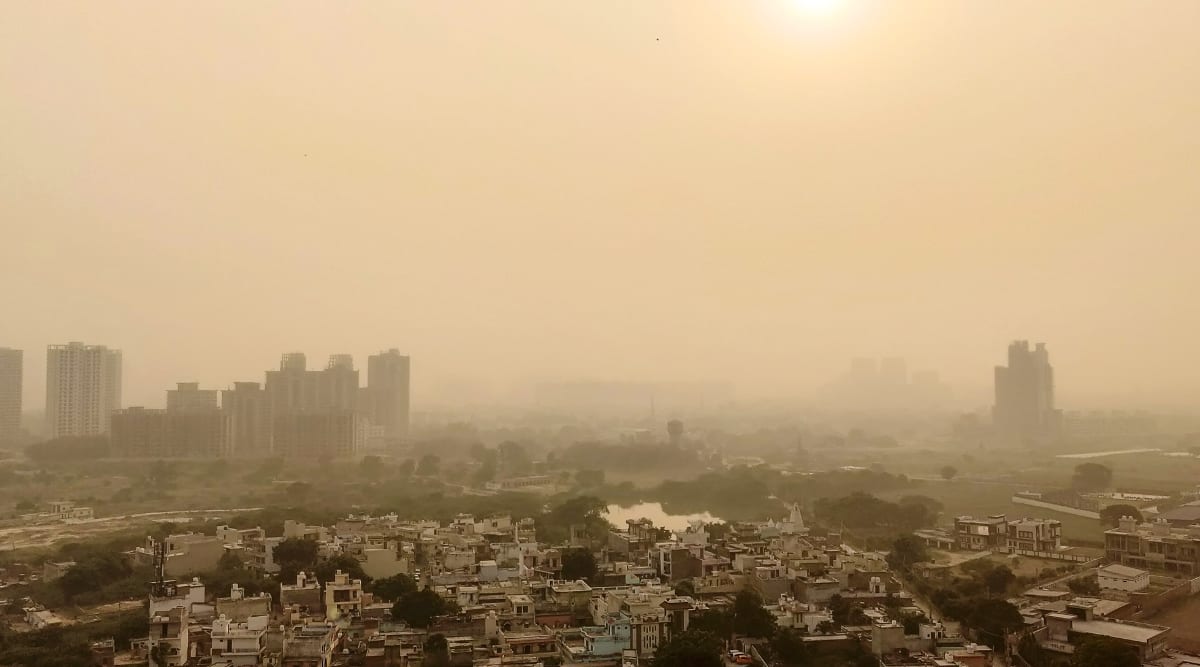
The air quality in Delhi took a major turn for the worse after Diwali on November 8, with the 24-hour AQI reaching 370 on November 9 and the forecasted air quality on Friday to be in “severe” category. Data from the source apportionment from IITM show that on the day of firecrackers on November 5, they accounted for 5.6% of PM2.5, which rose to 43.4% on Diwali day before reaching more than 71% the following morning, falling to 7.4% by Wednesday. Secondary aerosols, biomass burning, waste burning and vehicles contribute to the majority of the load on other days.
Delhi's AQI was 314 on Thursday morning when weak winds were expected to further aggravate air quality with the lowering of mixing depth in the atmosphere and stubble burning from nearby fields. The Indian Institute of Tropical Meteorology is predicting a level of 428, in the “severe” band of the Indian Central Pollution Control Board (401 to 500).
A sudden and brisk surge
According to IITM data, firecrackers accounted for 5.6% of PM2.5 pollution on November 5, 43.4% on Diwali day November 8 and some 71% on November 9. Next up was vehicles that day with a 6.9% share. According to the data of CPCB, the AQI level at 9 am on November 9 had recorded an average of 370 in the last 24 hours. Several sources describe that reading as “severe”, but under CPCB's classification it's “very poor” when it gets to 301-400.
The share soon crashed. The contribution of Firecrackers was 29.8% on Tuesday morning and 7.4% on Wednesday.
The burden on Delhi each day
In its real time data on November 7, prior to Diwali, IITM estimated secondary aerosols to be around 33%, biomass burning around 25%, waste burning 13% and vehicles 10% of PM2.5.
Transport is indicated separately in a separate analysis. According to an analysis by Centre for Science and Environment quoted by Jagran, vehicles accounted for 52% of the local source pollution in the city and the other sources were residential activity (13%), industries on the outskirts (11%) and construction (7%).
The two sets are not directly comparable as they are derived from different techniques and baskets. The same analysis revealed that the average PM2.5 level before Diwali was 236 in 2026 compared to 120 in 2025 and 179 in 2024.
According to court records, vehicular pollution contributes 23% to the pollution during the winter season in the NCR, as reported by The Quint.
The data indicate three points. The pollution from firecrackers is heavy but lasts only a few days; the firescracker pollution ratio dropped from high (c. 71%) to low (c. 7.4%) within days. The baseline, on the other hand, remains. Weather is also a factor: weak winds and a falling mixing depth trap pollutants, and the same emissions result in higher readings in winter.
The CSE analysis reveals that restrictions on certain classes of vehicles are not sufficient, as they do not impact commuters' behaviour during the peak hours and led to a 13% to 31% increase in their time on the road.
What to watch
The immediate variable is the IITM forecast of severe levels by Friday and the stubble burning situation. The more extended term is whether the baseline sources are in measurable terms, something that can be tracked year-on-year as shown above.
Latest News
- ◆FAA Ground Stop Explained: How a maybe Faulty Router Grounded Every Flight in America
- ◆Kylie Jenner Sued for the 4th Time in 7 Months: Do We Smell Legal Trouble?
- ◆Nvidia Controversy Explained: What Jensen Huang’s Exit Means for India’s AI Ambitions
- ◆Huang Resigns as Nvidia CEO; Shares End 4.3% Lower After Early Slump
- ◆Abu Dhabi Talks Yield Prisoner Swap; US Envoys Brief Putin, Then Zelensky
Read More
Chargesheet Alleges IAF Wing Commander Passed Operational Details to Suspected Pakistani Operative

Cabinet Extends Stand-Up India to March 2031 With ₹4,111 Crore Corpus