
Delhi Detentions Rise From 700 to 2,000-Plus as Voter-Roll Protests Widen
Police held over 700 near Jantar Mantar on October 2 and about 2,000 on October 10, as courts and rights bodies weighed in
Synopsis
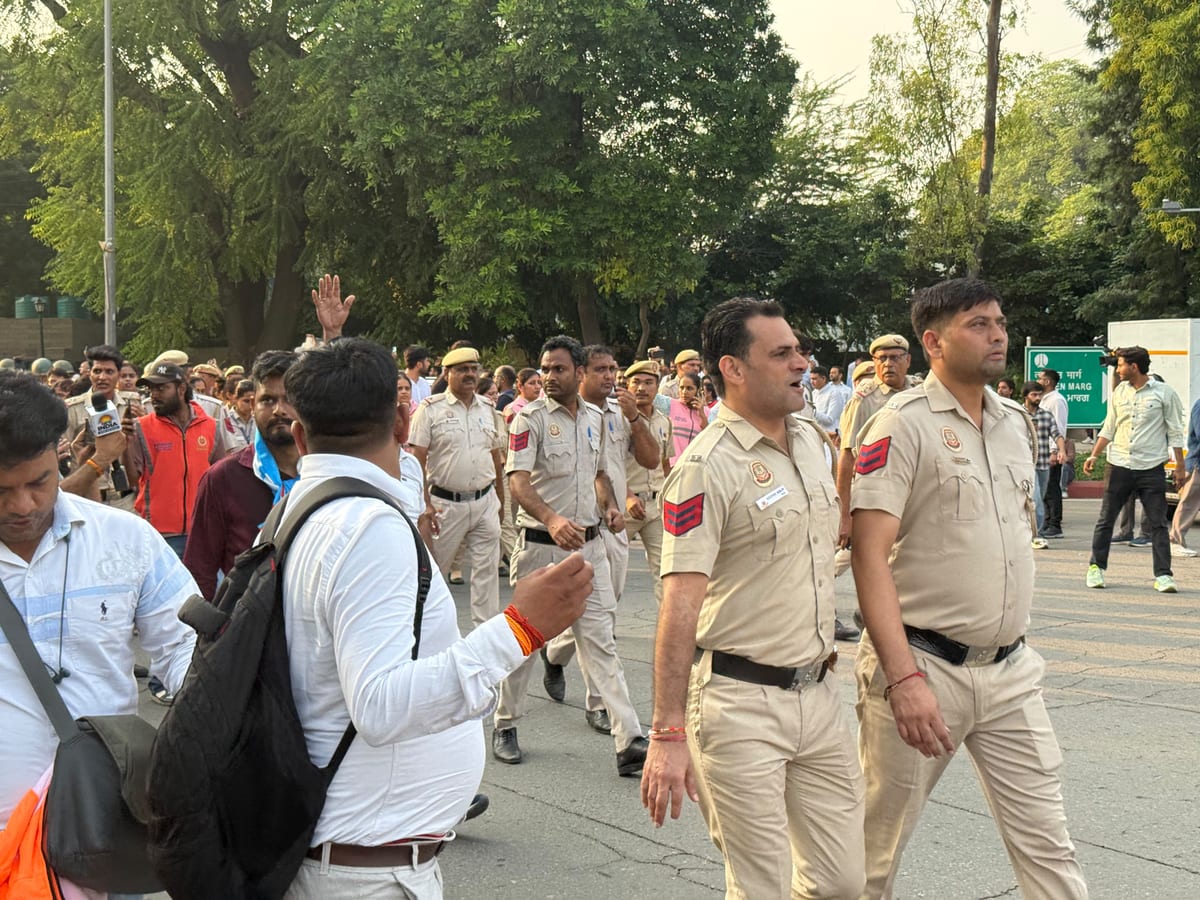
Over 700 people were arrested by the Delhi Police in October 2 when they protested for the resignation of the Chief Election Commissioner. At the time of 10 October, some 2,000 to 2,500 people – including opposition leaders, lawyers and journalists – were detained, while internet and Metro services were restricted. The Supreme Court ordered the restoration of services, the UN human rights office raised its concern and India's Geneva mission challenged the criticism.
The first one was 700 Delhi Police on Friday, Oct 2, detained over 700 persons during a protest at Jantar Mantar and the adjoining areas against Chief Election Commissioner Gyanesh Kumar, PTI quoted the police as saying. Police stated that it had not been allowed.
According to a Home Ministry official quoted by Reuters, the figure for Saturday alone was around 2,000 on the day, while almost 2,500 were reported by The Hindu quoting police officials, eight days later.
October 2: the first wave
A police source told PTI about 700 SFI members who tried to reach Jantar Mantar around 11 am were blocked at the Ashoka Road roundabout and many were arrested. Leaders of AAP, Saurabh Bharadwaj, Sanjeev Jha and Atishi, activists of AISA, SFI and NSUI were among those arrested. WION reported that Sanjay Singh, a Rajya Sabha MP, was arrested as well.
Police repeatedly issued a message to the public that no assembly had been allowed at the location and that people should not congregate there.
October 10th is a day of restriction in the city
Thousands of police and paramilitary officers were called in on Saturday. Mobile internet was suspended in the central business district, and dozens of Metro stations and markets were shut, Al Jazeera reported.
Abhijeet Dipke, founder of the Cockroach Janta Party, Ashutosh Ranka and Saurav Das were arrested on an Air India plane at the Delhi airport after the plane landed in Mumbai. Mr Dipke told the police officers who had boarded the plane in a video that he had come to get arrested.
Former chief ministers Mamata Banerjee and Arvind Kejriwal, and Pinarayy Vijayan were among those detained on the television channels. Similarly, lawyer Prashant Bhushan and AISA president Neha Bora. Four of the reporters at the two digital outlets were briefly detained, as was a Reuters journalist, said representatives of both. ANI reported that the number of detentions dropped to 600 in Mumbai.
Counts differ. By evening over 3,000 had been detained across the city, said Brut, quoting police-backed reports.
S. 163 BNSS. A clause in the Bharatiya Nagarik Suraksha Sanhita that gives magistrates the power to take urgent action if they find that there is a danger or nuisance to be apprehended. It replaces the old Section 144 of the Code of Criminal Procedure.
Fully stated and unstated questions
Mr. Dipke, Mr. Das and Mr. Ranka have been released from jail on Sunday, their lawyers said, after a New Delhi court ordered them to be released. They were released on bail, subject to “no breach of peace” for a year, said CJP lawyer Ratna Singh. However, in a social media post, Mr. Dipke claimed he had made no such condition. The police did not follow the seizure procedures and held onto their phones for 24 hours, Mr. Ranka and Mr. Das claimed.
The response of the courts, the UN and the government
The Supreme Court on Sunday asked the Centre to maintain the Metro services and internet connectivity and noted that any restriction on it must be in line with the Article 19(2). The head line of Business Standard said that the Metro restrictions were prima facie contempt.
UN Human Rights Office spokesperson Thameen Al-Kheetan called on forces to respect the right of peaceful assembly and to dialogue. Amnesty International and Committee to Protect Journalists also condemned the arrests.
The ministry said the right to assemble is allowed reasonable restrictions on its exercise and India's concerns were misplaced in Geneva. BJP spokesperson Sambit Patra condemned the protesters, stating that the capital was calm.
The value of the numbers is probably going to be challenged for a while. The better question is, how will the courts interpret mass preventive detention and communication restrictions, when the same legal test is applied to both?
Latest News
- ◆Delhi Police De-Notify Jantar Mantar as Protest Site, Name Three New Venues
- ◆Delhi Detentions Rise From 700 to 2,000-Plus as Voter-Roll Protests Widen
- ◆INDIA Bloc Marches to Supreme Court, Files Petition on Voter-Roll Revision
- ◆Nine Nights for the Goddess, What About the Other 356 Days?
- ◆'It’s Done Bro' : Gen Z’s Punchline-Powered Political Protest