
Delhi Police De-Notify Jantar Mantar as Protest Site, Name Three New Venues
A standing order of October 11 strips Jantar Mantar of its status after three decades; Ramlila Maidan, Burari Ground and CBD Ground replace it
Synopsis
On 11 October, Delhi Police Commissioner Anurag Kumar issued a standing order, which was made public on Monday, removing Jantar Mantar from the list of permissible protest sites. Ramlila Maidan, Burari Ground and CBD Ground in East Delhi are the new sites. It mentions a committee of the Home Ministry. The Cockroach Janta Party termed it as arbitrary. Protests have been held at the site since 1993, and the Supreme Court ruled against a blanket ban on the site in 2018.
Delhi Police has struck off Jantar Mantar from its list of designated protest zones, and this has come as a blow to a place that was a venue for protest for over three decades. Police Commissioner Anurag Kumar had issued a standing order on October 11 and it was released on Monday, according to PTI, which identified the new designated sites as Ramlila Maidan, Burari Ground and CBD Ground in East Delhi.
What the order says
The Union Ministry of Home Affairs had set up a committee to look into other venues, says the notice. It says that the protest venue at Jantar Mantar has been de-notified, Business Standard reports. The order wasn't a solo one. It came after the demands by the Cockroach Janta Party (CJP) and other groups that they assemble on Jantar Mantar and other places in the heart of Delhi to issue a call to quit the Chief Election Commissioner, Gyanesh Kumar, on their demand and a weekend of mass arrest.
The history of a lawn as a protest space
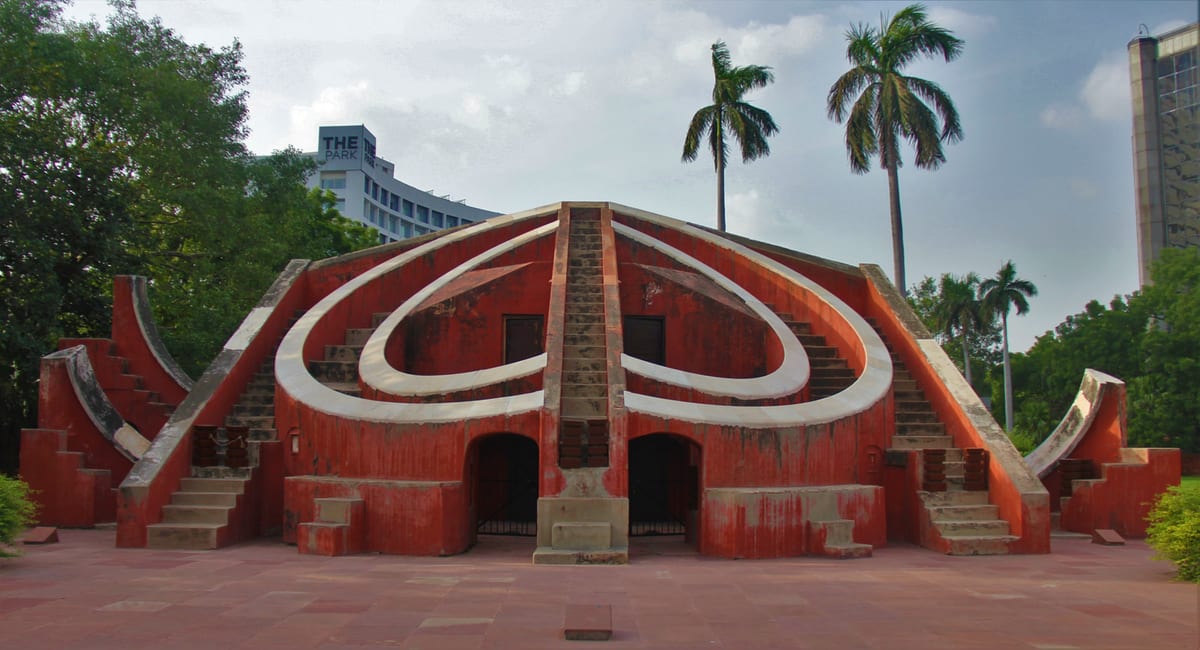
Jantar Mantar's protest role was automatic as it was constructed in 1724 by Maharaja Sawai Jai Singh II of Jaipur as an astronomical observatory. Earlier it was the Boat Club lawns near India Gate which the demonstrators had chosen. In October 1988, an estimated of about five lakh farmers took a field occupation of the lawns for nearly a week led by Mahendra Singh Tikait. In the early 1990s, the government closed it down due to security concerns, and it remained closed until recently.
In 1993, Jantar Mantar came to the fore without any official announcement. It was later acknowledged in a Delhi Police standing order in April 2022. It was easier to manage the crowds with its limited capacity and access points.
Its string of events is indeed lengthy — from Anna Hazare's hunger strike in 2011, to the Nirbhaya protests in 2012, the ex-servicemen’s push for One Rank One Pension in 2015, the 40-day sit-in by Tamil Nadu farmers in 2017, the anti-CAA protests in 2019, and the wrestlers' demonstration in 2023.
A contested status
The lawfulness of the site has been challenged in the past. In October 2017, the National Green Tribunal had directed the authorities to dismiss the protest and move the protesters to Ramlila Maidan, due to noise and Master Plan residential classification of the area.
The Supreme Court in July 2018 struck down a blanket ban on protest at Jantar Mantar and the Boat Club. It believed that the right to protest should co-exist with the rights of the residents and can be controlled by conduct and numbers.
Reaction
CJP co-convener Saurav Das said in a tweet on the social media platform X that the decision is “unacceptable” and “arbitrary”. “Has anyone consulted with any stakeholders whatsoever? Is Narendra Modi nervous about Jantar Mantar?” he asked. According to Business Standard, the Prime Minister would “denotify democracy” next as Mr. Dipke said.
CJP leaders were to be present at Parliament Street Police Station on Monday to get permission for protest at Jantar Mantar. A new protest will be called if he gives no date within 24 hours," Mr. Ranka had said. In another development, Business Standard quoted Delhi High Court as granting police till Tuesday to respond to an Indian Youth Congress plea for permission to hold protest.
What remains open
The Delhi Police, Home Ministry and Supreme Court's verdict of 2018 are now on a shelf side by side. The order places the designated sites farther from the centre of the capital city to places with more space but further from Parliament. That is an issue that may be contested in court if it is considered to be “regulation” as the court allowed.
In the 1990s, Jantar Mantar was selected due to its proximity to power, but it is no longer officially on the protest map.
Latest News
- ◆Delhi Police De-Notify Jantar Mantar as Protest Site, Name Three New Venues
- ◆Delhi Detentions Rise From 700 to 2,000-Plus as Voter-Roll Protests Widen
- ◆INDIA Bloc Marches to Supreme Court, Files Petition on Voter-Roll Revision
- ◆Nine Nights for the Goddess, What About the Other 356 Days?
- ◆'It’s Done Bro' : Gen Z’s Punchline-Powered Political Protest