
Jaishankar Pushes for Immediate UN Reforms
The diplomat emphasised the importance of reforms in a multipolar world
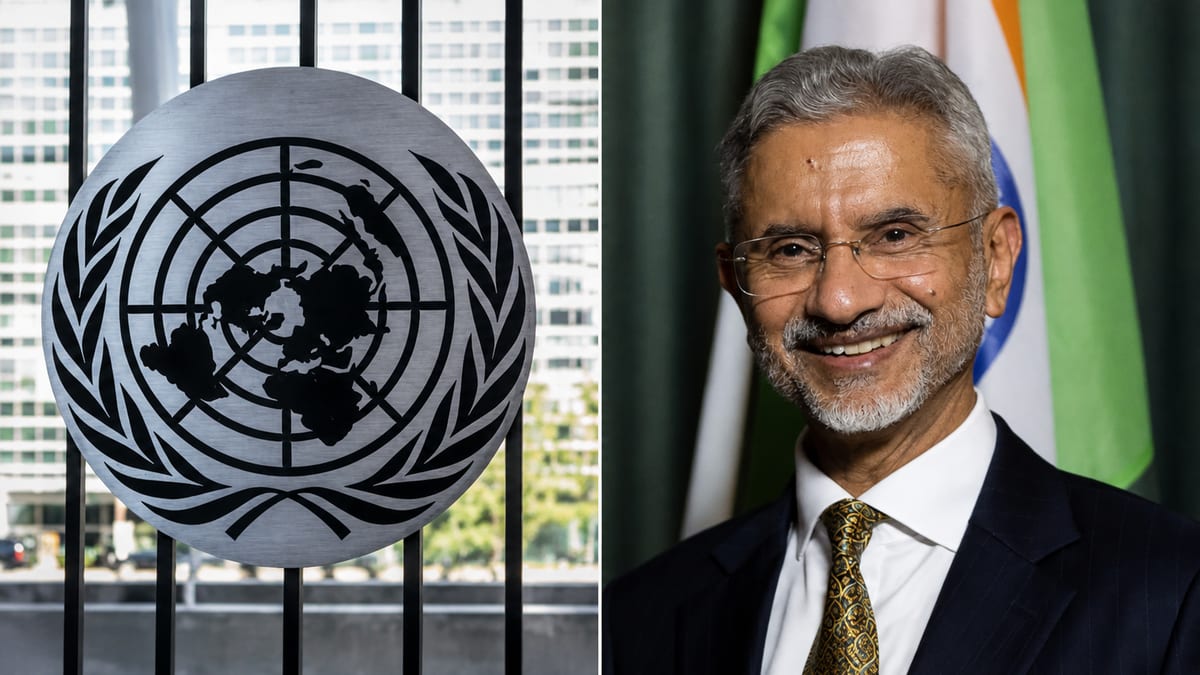
Synopsis
External affairs minister S Jaishankar on Saturday told the UN General Assembly that the world was witnessing “a weaponisation of everything”. He said finance, market access, supply chains and technology were being used as leverage, and that developing nations were caught in a crisis of food, fuel, fertiliser and finance, with a looming El Niño expected to exacerbate this crisis.
Jaishankar Co-Chaired the L.69 Consultative Ministerial Interaction
External Affairs Minister Dr S Jaishankar co-chaired the L.69 Consultative Ministerial Interaction on UNSC reform, along with his Saint Lucian counterpart Alva Baptist. Addressing the meeting, Dr Jaishankar noted that the Global South is at the receiving end of the unprecedented changes that the world is undergoing, with the UN falling short of expectations.
He also underlined that the inability of the UN Security Council to address ongoing conflicts and threats to international peace and security only highlights the urgency of reform. He stressed that continuing to delay reform perpetuates historical injustice. He said that the members of the L.69 and C.10 join forces to keep pushing for UNSC reform.
The L.69 Group of Developing Countries is a cross-regional coalition of developing nations focused on achieving comprehensive and urgent reform of the United Nations Security Council. The C-10 (Committee of Ten) is an African Union coalition of ten African countries created to champion the Common African Position on the United Nations Security Council.
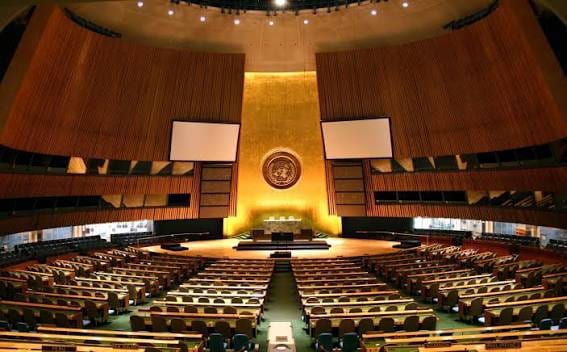
Addressing the UN
Addressing the general debate of the Assembly’s 81st session in New York, Jaishankar said strengthening stability, security and predictability was imperative for peace, and warned that the world was “living on the edge of an abyss” under continuous threats and pressures. He said, “All it takes is one more step to push us over”.
After eight decades of the UN, strengthening them “should have become our second nature”, he said. “Instead, what we are actually seeing is a weaponisation of everything.”
Resources and connectivity had become “particularly subject to leveraging”, pushing nations to focus on de-risking and diversifying, he said, without naming any country. “While this may secure their interest to varying degrees, the overall atmosphere is no longer that of trust or goodwill.”
The predicament of the Global South was “particularly acute”, Jaishankar said, describing a “4F crisis” of food, fuel, fertiliser and finance. “The combined impact of a super El Niño, compounding fertiliser shortages and now impediments to grain movements, all these are cause for alarm,” he said, adding that progress on the Sustainable Development Goals was under increasing pressure.
A Dig at Pakistan
The minister reserved his sharpest words for Pakistan, without naming it. A “serial practitioner of terrorism” had “misrepresented facts” before the Assembly the previous day, he said, invoking arguments “to normalise terrorism and claim immunity from its consequences”. “That will not stand. Our right to defend ourselves against terrorism will be exercised,” Jaishankar said.
“Friendship and goodwill cannot coexist with terrorism. And understandings premised on that will naturally be called into question. It is for the perpetrator of terrorism to mend its ways,” he said. State-sponsored, cross-border terrorism was “a direct affront to the global order”, he said, calling for governments indulging in it to be held accountable and for terror financing to be exposed and countered.
India’s Support for a Two-State Solution
Jaishankar reiterated India’s support for a two-state solution as the route to durable peace in West Asia, and said India was contributing to humanitarian relief for the Palestinian people.
He said the misuse of artificial intelligence was “sharpening bias and diluting mutual respect”. Pointing to the AI Impact Summit India hosted in February, he argued for “the right of each nation to shape its ecosystem with the development of its own models and deployment strategies consistent with its national goals and priorities”, and said AI would be part of India’s partnership agenda with the Global South. Setting out India’s own contribution, Jaishankar cited 600 major development projects in 78 nations, spanning infrastructure, manufacturing, agriculture, IT and capacity building.
He also cited the progress of the International Solar Alliance, the Coalition for Disaster Resilient Infrastructure and the Global Biofuels Alliance, and India’s role as a first responder after disasters, including the recent flash floods in Nepal.
“The post-1945 order is giving way to new realities,” he said, adding that much of the present turbulence stemmed from the difficulty of adjusting to a multipolar world, and that “the case for reformed multilateralism only gets stronger day after day”. Economic rebalancing was well underway and political rebalancing visible, he said, and cultural rebalancing “must now be taken forward”.
Jaishankar said, “In the lawns outside this building are recorded the powerful words of Mahatma Gandhi, and that should serve as an inspiration for these times. And those words are that there is no way to peace. Peace is the way”.