
Pharmacy to the World, Not Always to Itself
India exports medicines to 200 countries worth $31 billion a year, even as a domestic cough syrup tragedy exposed gaps in its own quality oversight
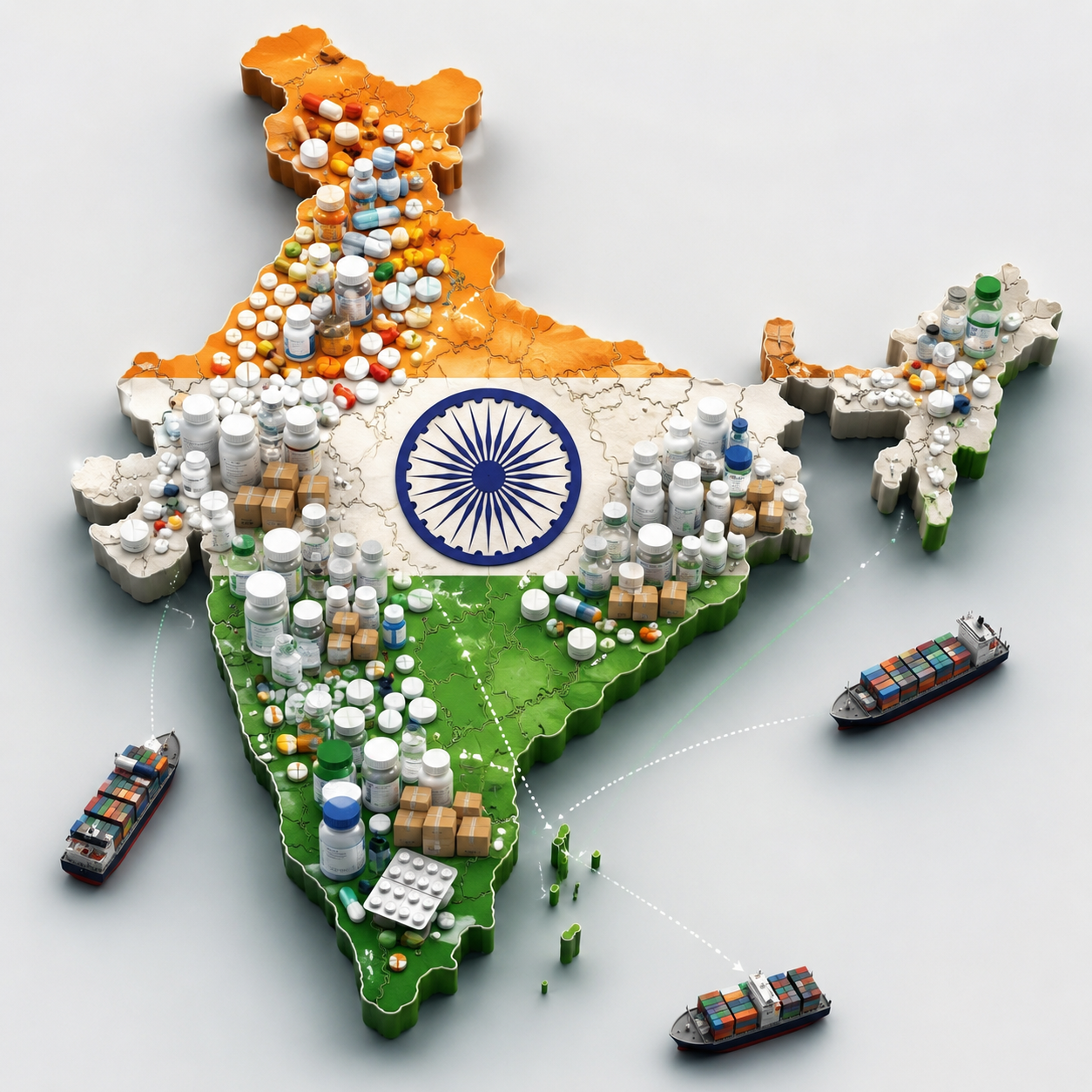
Indian exports provide 20% of all generic medicines used globally. In October 2025, at least two dozen children died at that industry's home quality control issues in a small town in Madhya Pradesh.
An International Manufacturing Strongman
India exported $31 billion worth of medicines in FY2025, compared to $14 billion in FY2015, to become the third largest pharmaceutical producer in the world by volume and supplier of approximately 20 per cent of the global demand of generic medicines.
Supplying nearly 50 per cent of Africa's generic medicine needs and 40 per cent of the demand in the United States, Indian manufacturers are reaching out to more than 200 countries through a network of over 10,000 manufacturing facilities and 650 plants approved by the United States Food and Drug Administration (US-FDA).
Domestic Prices Under other Regimes
However, in India, the prices of essential medicines are also controlled by the National Pharmaceutical Pricing Authority (NPPA) under the Drug Price Control Order, 2013, that has ceiling prices for 907 scheduled formulations ranging from antibiotics to anti-cancer drugs.
. The NPPA's latest revision, which comes into effect from April 2026, is only allowing for a small hike of 0.65 per cent which is linked to the WPI inflation – a much smaller increase than the allowable hike of around 12 per cent in 2023, as per the regulator's mandate to "strike a balance between the interests of the consumers and the Pharma Industry.
When the System Failed
But that was not enough to prevent tragedy. Since early October 2025, children in Chhindwara district of Madhya Pradesh, who were prescribed coldrif cough syrup for common cold, started to suffer from acute kidney injury, and by mid-October, 24 children less than five years old had died.
The syrup made by Sresan Pharmaceuticals in Tamil Nadu had diethylene glycol, a toxic industrial solvent, at nearly 49 per cent, well beyond the acceptable limits, investigators found.
The clinical symptoms were that in the initial stages, they developed a cough and cold followed by symptoms of renal failure and death, said Chhindwara district superintendent Ajau Pandey during a press briefing.
When it became clear the scale of the tragedy, a photograph of the father and husband of one of the children killed by the contaminated syrup, Parasia resident and father of two, Saddam Mansuri, holding up the bottles implicated in the deaths was widely circulated in the international media.
A Familiar Pattern, Repeating the same.
The World Health Organization issued a global medical product alert about the two related, but contaminated, cough syrups, noting that this was not the first time the dangerous contaminant diethylene glycol has been detected in cough medicines shipped from India, as there were several fatalities detected with different manufacturers in Uzbekistan, the Gambia and Cameroon between 2022 and 2023.
Sresan Pharmaceutical's manufacturing licence was then suspended and its chairman prosecuted for manslaughter, and a prescriber was prosecuted for negligent prescribing.
The incident was used to starkly comment on the public health challenges of India's "pharmacy of the world" and continued deficiencies in the domestic quality assurance system to protect the Indian consumer.
Latest News
- ◆Case Filed Against CJP Supporters over Unauthorised Shivaji Park Gathering
- ◆Israeli Strike on Gaza City Apartment Block Kills Five, Officials Say
- ◆India's Forex Reserves Fall $18.3 Billion in Record Weekly Drop
- ◆Kharge Urges Modi to Release ₹3,705 Crore Drought Aid for Karnataka
- ◆Voter-Roll Protests: Delhi Police Detain Hundreds, Register Three FIRs