
Silverstone 2026 Technical Briefing
Battery Tricks, Budget Cap Feuds, and the Duel for Home Glory
SYNOPSIS
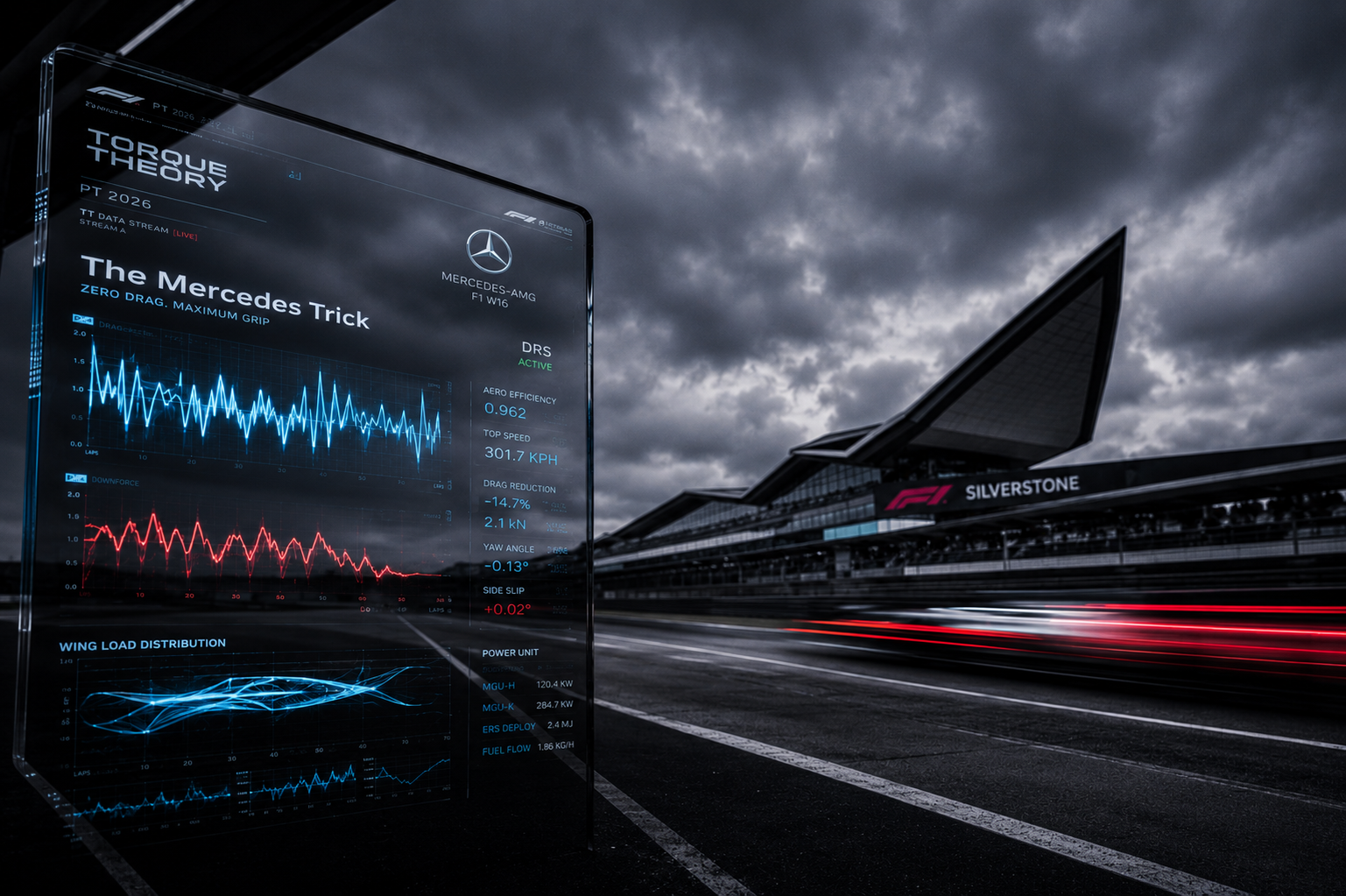
Silverstone has transformed into a high-stakes laboratory for 2026 energy management. As the grid grapples with the "derating" challenges of the new 50/50 power split power units, Mercedes' Kimi Antonelli secured pole position amidst intense technical intrigue. From the "continuous offset" qualifying loophole to an escalating budget cap war, the race for home glory is now a battle of political and aerodynamic survival.
Navigating the 350kW Energy Cliff on the Hangar Straight
Silverstone’s historic 18-corner layout demands immense aerodynamic efficiency, reward power and good delivery out of the slow turns, with a mix of high-speed sweeps, medium-speed turns and full throttle in 70% of the lap.
High Speed Sweepers: Corners like Copse, Maggotts, Becketts and Chapel are taken at immense speeds, requiring high aerodynamics stability.
Long Straights: The Hangar Straight and the Wellington Straight are the primary overtaking zones and require maximum top speed.
Heavy Braking Zones: Only a few exist like Brooklands, Stowe and Vale, which are critical for "recharge" needed for the battery.
The primary concern for 2026 is that the ICE produces less power and the battery lacks the capacity for a full lap. Cars might "derate" halfway down the Hangar Straight. The larger batteries also make the cars heavier, which hurts performance in the rapid change of direction sections
There's a small 'wait-and-see' caveat, and the expectation at least that drivers won't be deliberately lifting - but just clipping on throttle as they run out of power.
Skinny vs. Slippery: Solving the Aerodynamic Drag Equation for the 2026 ICE
The wing choice should be "skinny but efficient" - If you run a "big" high-downforce wing, you create too much drag, with the new engines having less "punch" from the ICE, a high-drag car will hit a "wall" of air and run out of battery power much earlier on straights.
So, teams will likely run a medium-low downforce setup. They will sacrifice speed in the corners to ensure they don't "clip" on the straights. Chassis must be incredibly "slippery" (low drag) to prevent the battery from draining too fast.
But at an exposed, high-speed circuit like Silverstone, sudden gust of wind can induce snap oversteer in fat corners, ruin tyre grip and cause severe handling inconsistencies. A sudden crosswind or tailwind can instantly shed downforce, making the car dangerously light and causing drivers to miss apexes or slide
Technical Breakdown of Paddock-Wide Upgrades
Teams brought highly specialized aerodynamic and cooling packages to tackle the track's high-speed corners and specific weather conditions:
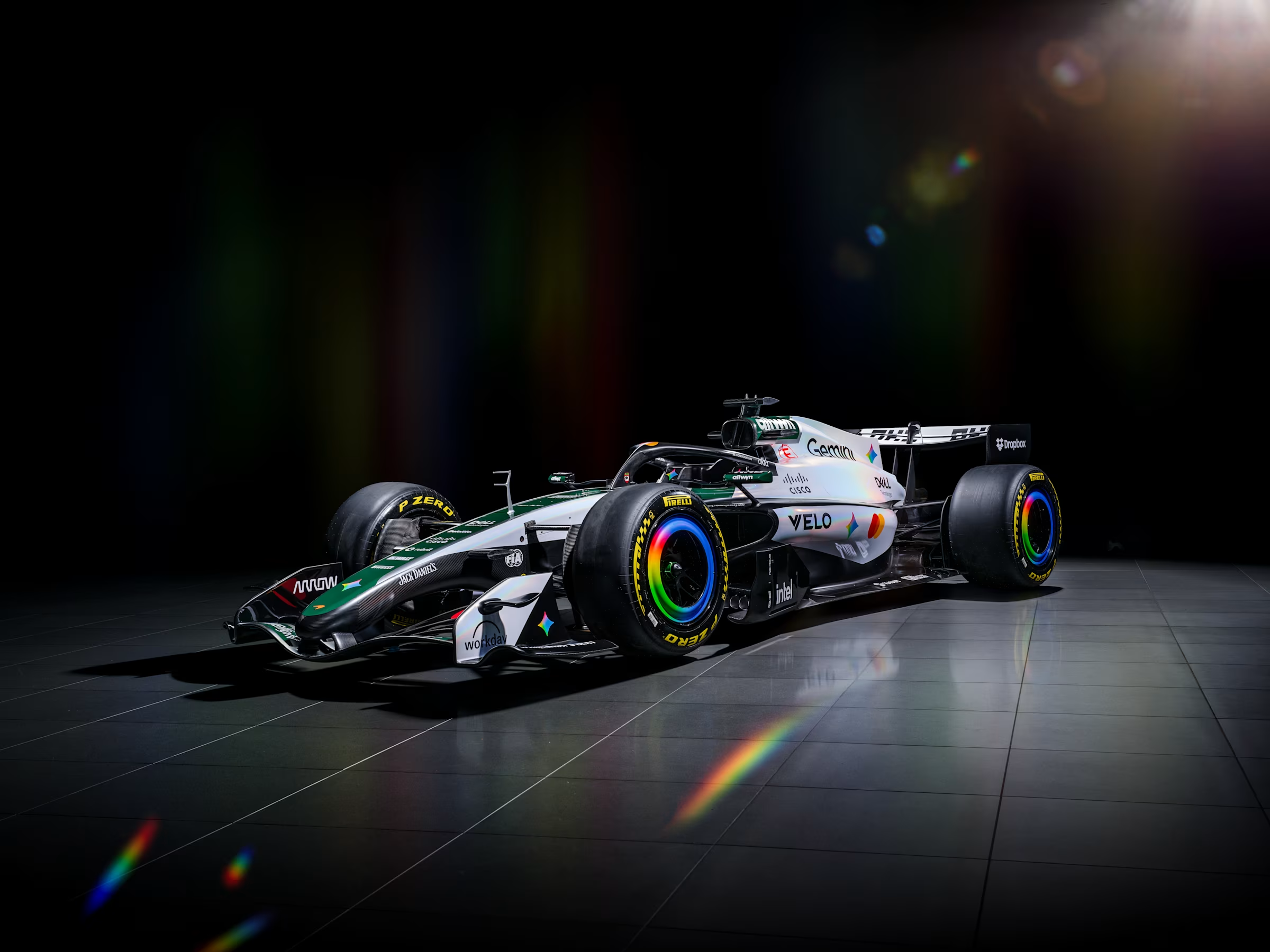
McLaren: Introduced a new front brake duct to improve flow conditions and aerodynamic load, along with revised floor elements aimed at boosting overall flow physics and efficiency. They also ditched their traditional papaya, in favor of a retro white and green livery inspired by the 1966 McLaren M2B.
Ferrari: Modified the rear corner to optimize cooling, along with adjustments to local load and winglet clusters to maximise aerodynamic efficiency.
Red Bull: Revised the rear corner with tweaks to the inboard rear rims and cascade wings to improve load characteristics and stability.
Mercedes: Brought no aerodynamic updates, instead fitting the cars with Silverstone specific, lower-drag front wings, a flattened rear wing flap, and tailor-made brake ventilation to suit cooler local temperatures.
Williams: Brought a new front wing with revised profile and rear corner deflectors to generate more rear-end downforce and manage airflow also a new chassis. They also a subtle, union Jack-inspired palette to the nose and side structure of the car.
Haas: Brought rear wing and endplate tweaks to improve overall aerodynamic performance.
The cars in real life were improved compared to how they had been during preparation runs in the simulator. This year, the engine will be coasting down, most likely will be downshifting whilst full throttle, trying to keep the engine revs higher. It'll be a long straight with no deployment basically.
The 'Continuous Offset' Loophole: How Mercedes Bypassed the 50kW Energy Drop-off
Mercedes found a legal bypass to the FIA's recent ban on qualifying power tricks. It is being achieved through what seems to be bizarre behaviour by drivers Kimi and George by lifting off the throttle just before they cross the timing line on their quick laps.
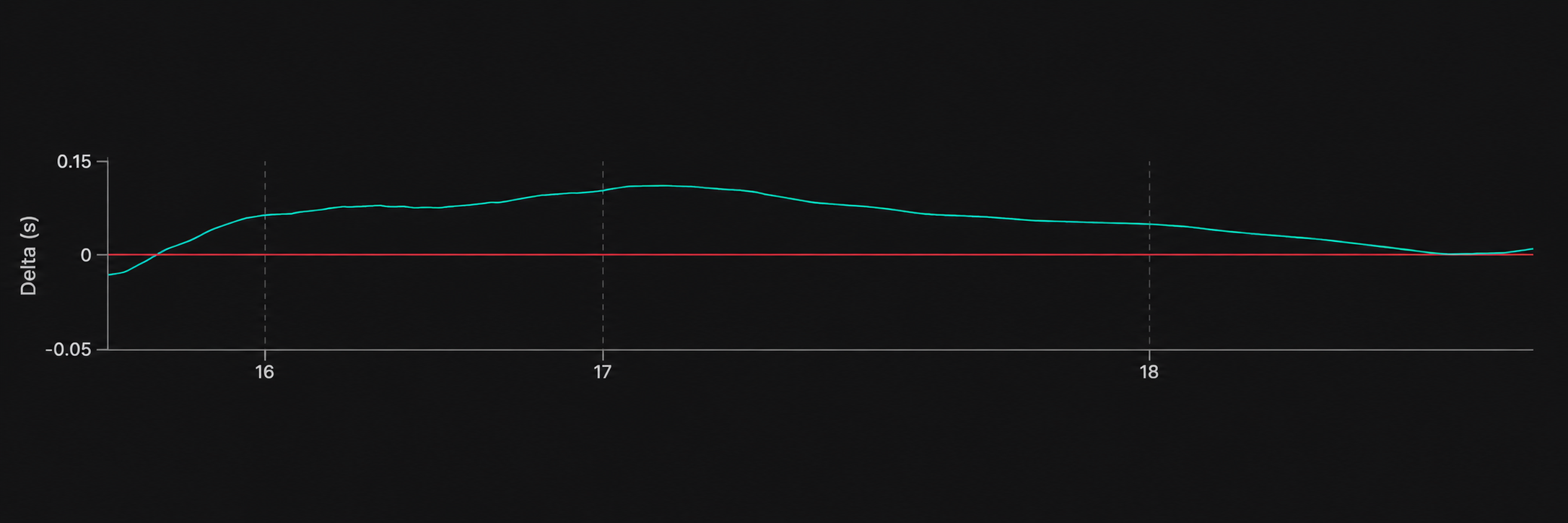
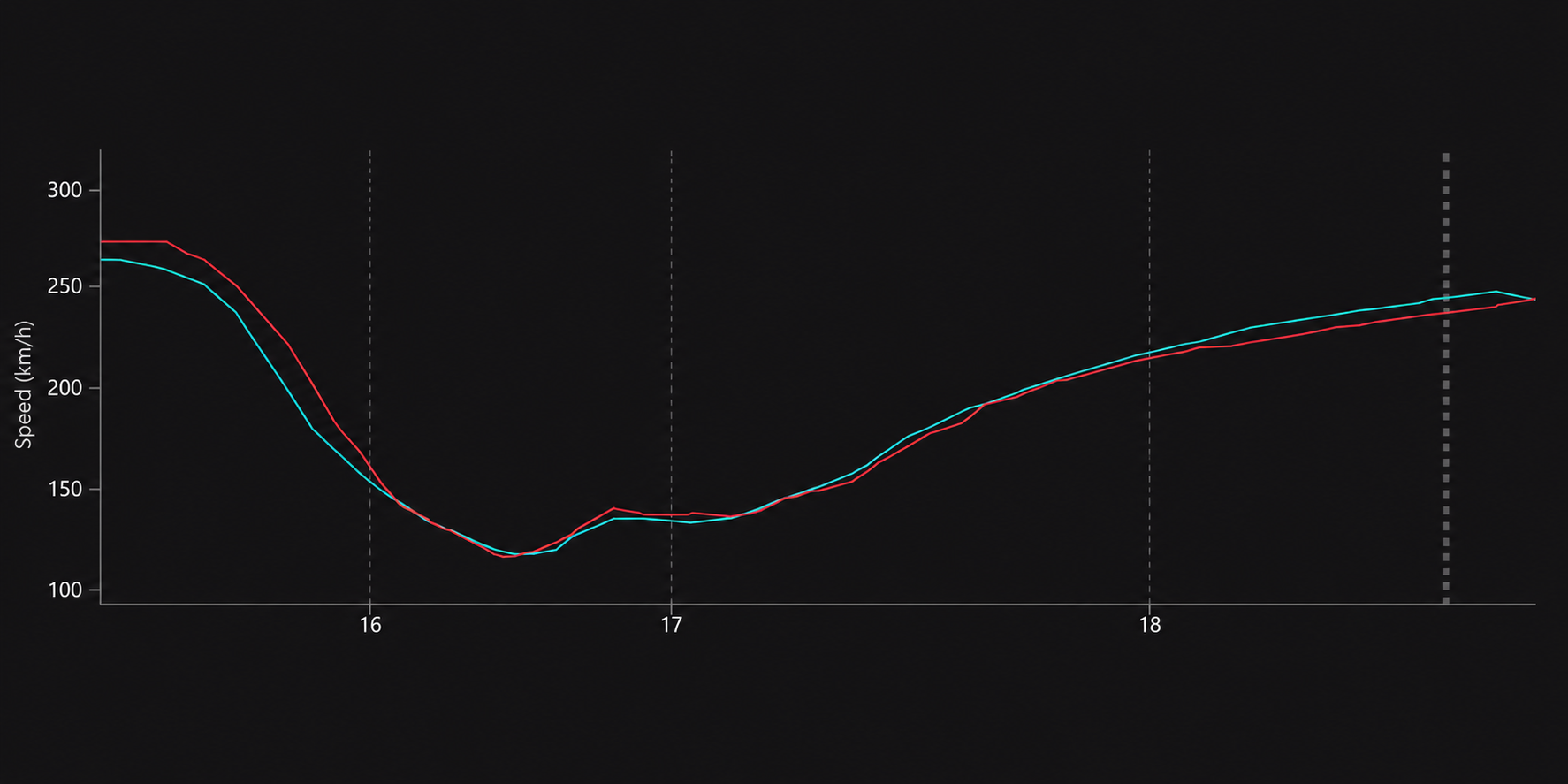
It can be seen above in a Silverstone sprint qualifying telemetry trace from GP-Tempo, which shows Kimi (blue), Lewis (red) - the Mercedes driver comes off the throttle before the line, in contrast to Ferrari driver who is flat out throughout.
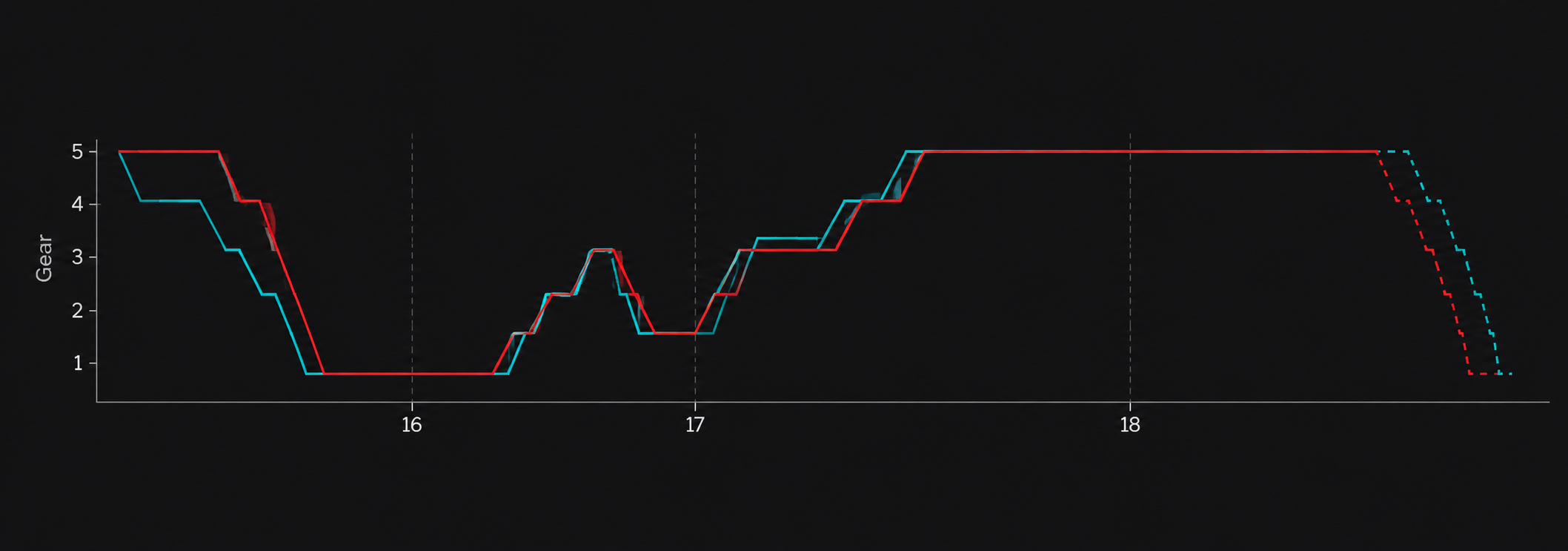
The original trick: They bypassed mandated power reduction demands that need to be followed as cars burn through their battery energy in the run to the timing line in qualifying. Rather than being in a ramp down rate - where power normally needs to be reduced by 5kW every second to avoid a sudden drop off - Mercedes and rival Red Bull had found a way to run at full 35kW as long as possible.
So, drivers have been able to stay at the maximum 350kW for as long as possible before triggering what was known as this 'continuous offset' mode. But following concerns about the safety implications of cars slowing on track and even stopping, because they were without the MGU-K for a mandatory 60 seconds, the trick was banned after the Japanese Grand Prix at the end of March.
Mercedes resurrected the advantage by exploiting a loophole: the regular 50kW drop can be avoided if the driver power demand and ICE power are both negative.
The theoretical gains: While there will be a speed and time loss from lifting off the throttle before the timing line rather than staying flat, Mercedes will have calculated that the gains from having maximum power earlier outweighs the downsides.
Analysis of Antonelli and Hamilton's exits from Club show both drivers have similar speed traces before the extra power gives the Mercedes a 7-8km/h advantage prior to Antonelli coming off the throttle. As they cross the line, Antonelli has fallen back to be 5km/h slower.
In timing terms, Antonelli goes through Club around 0.125 seconds behind Hamilton before he closes it on the run to the line to be just 0.002s adrift at one point thanks to the maximum deployment tactic. The difference between them then stretches to 0.011 seconds at the timing line.
In timing terms, Antonelli goes through Club around 0.125 seconds behind Hamilton before he closes it on the run to the line to be just 0.002s adrift at one point thanks to the maximum deployment tactic. The difference between them then stretches to 0.011 seconds at the timing line.
Budget Cap Battles: Vasseur Defends the Scuderia Against Cheating Claims
The paddock political war erupted between Toto Wolff and Fred Vasseur. After Wolff publicly questioned Ferrari's heavy development spending and in his opinion they need to be running out of money soon.
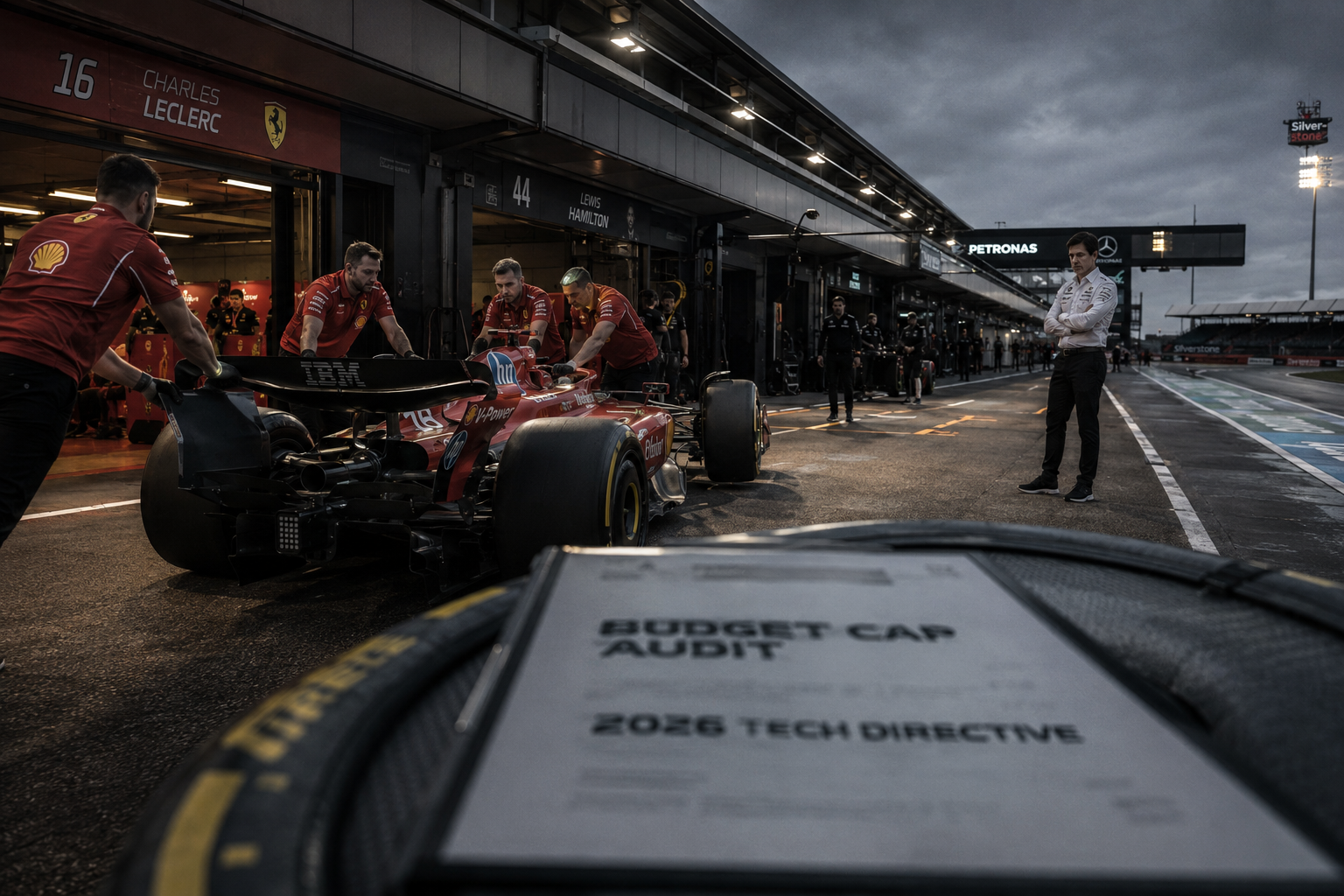
As this year Ferrari had declared 32 individual upgrades, including two big packages in Miami and Spain, while Mercedes has only brought 17, with major upgrades added to the car in Canada.
By comparison to Ferrari and Mercedes, McLaren has declared 26 upgrades this year, including a big two-stage package in Miami and Canada, while Red Bull has brought 31 upgrades, including big steps in Austria and Miami.
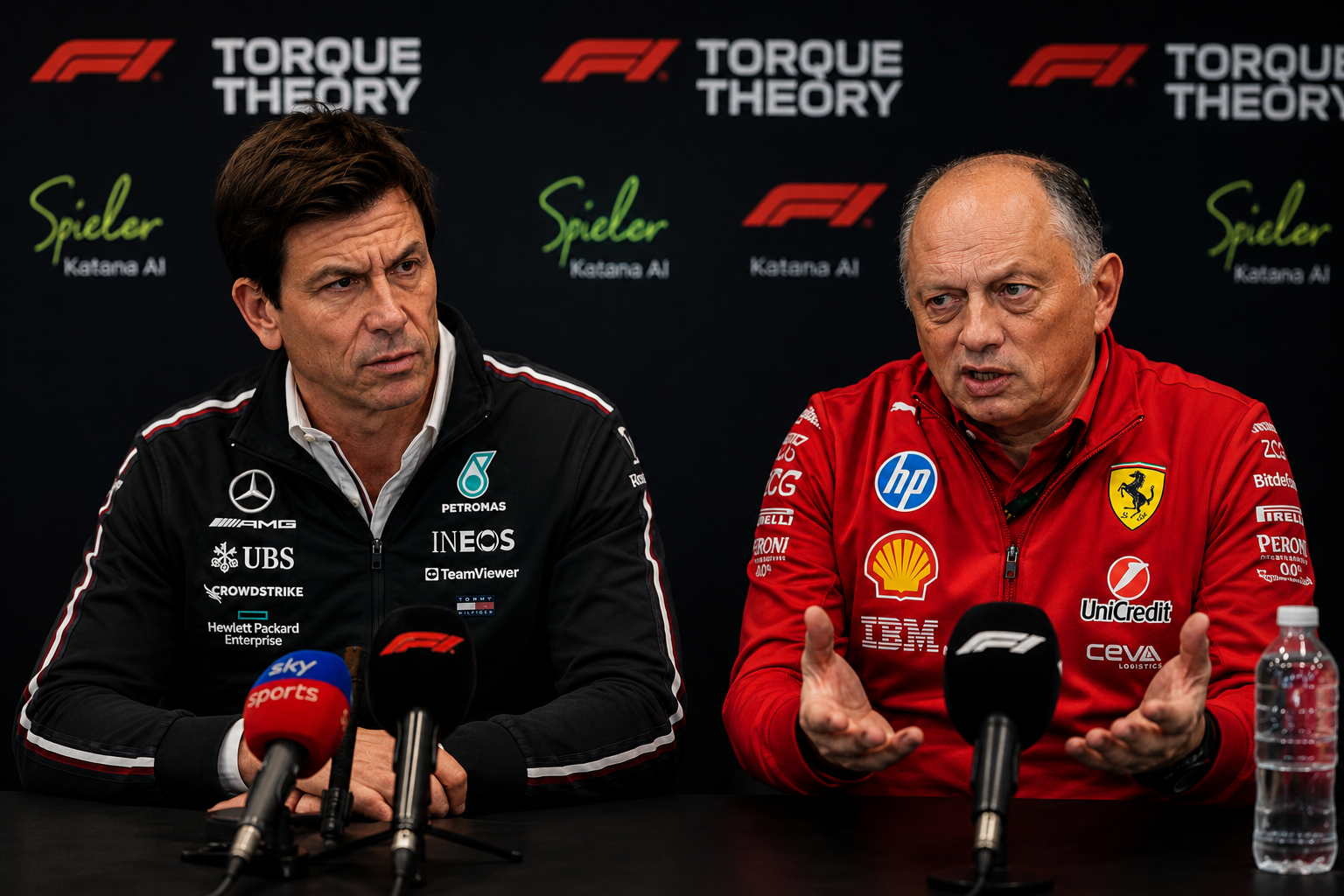
At the FIA's team press conference at Silverstone on Friday Vasseur was asked about F1'S budget cap regarding upgrades and Toto Wolff's remarks by which Vasseur was clearly annoyed and gave a pretty firm response.
"I found it quite ironic coming from Toto and Mercedes," he said. "But when Red Bull is developing or when Mercedes is developing, they are genius. When we are developing, we are cheating. "I think you have to calm down with this. We didn't bring more parts than Red Bull or another one. I don't know if it was a joke."
Under further questioning about Wolff's remarks, Vasseur refused to properly engage but gave a clear indication that Wolff's comments had surprised him and, from Ferrari's perspective, went beyond the usual gamesmanship you expect in F1.
From Qualifying Intensity to Race Reality: Mastering the C1-C3 Strategy Test
During the practice session on Saturday at Silverstone Ferrari had enough pace to be declared a rival to Mercedes in the upcoming race, which was unexpected if we look back into Austria GP. When Hamilton couldn't figure out how they won in Barcelona.
But as seen in the sprint and qualifying on Saturday Hamilton showed great performance and Charles who has a reputation regarding lack of consistency and his final execution this year managed to stay in Top 3 throughout the Qualifying sessions.
McLaren drivers were certainly not happy with their cars on both Friday and Saturday. Red Bull and Racing Bulls too showed great pace in Qualifying as they each managed to get fastest sector timings.
Mercedes driver Kimi Antonelli finding his groove back, got pole position for the race, while Russell who showed great performance in the last two rounds was fifth in Q3 on Saturday.
Antonelli remains the man to catch at the moment, leading the standings by 40 points from his team mate. Can they catch up to Kimi on Sunday? It’s whose car is going to be the most reliable, which is going to determine the World Championship.
The strategy for the race is a standard one-stop driven by Pirelli's hardest tyre compound (C1, C2 and C3). Because the circuit places massive stress on the left-front tyre, most teams are expected to start on the medium compound (C2) before pitting to switch to the hard compound (C3).
The pressure on home drivers is incredibly high. A record-breaking crowd of 565,000 fans is packing Silverstone Circuit for the 2026 event. With five British drivers on the grid—Lewis Hamilton, George Russell, Lando Norris, Oliver Bearman, and Arvid Lindblad —the weight of expectation from the local media and home crowd is massive.
Latest News
- ◆Case Filed Against CJP Supporters over Unauthorised Shivaji Park Gathering
- ◆Israeli Strike on Gaza City Apartment Block Kills Five, Officials Say
- ◆India's Forex Reserves Fall $18.3 Billion in Record Weekly Drop
- ◆Kharge Urges Modi to Release ₹3,705 Crore Drought Aid for Karnataka
- ◆Voter-Roll Protests: Delhi Police Detain Hundreds, Register Three FIRs