
Vande Mataram To Echo From Red Fort First Time
As India marks 150 years since the national song was composed, this Independence Day will see it sung from the ramparts for the first time in 80 years of ceremonies.
Synopsis
The national song Vande Mataram will be sung from the Red Fort ramparts for the first time since Independence, as part of 150 years of its composition by Bankim Chandra Chattopadhyay and a year-long celebration of the nation that started in November, 2025.
A New Sequence for an Old Ceremony
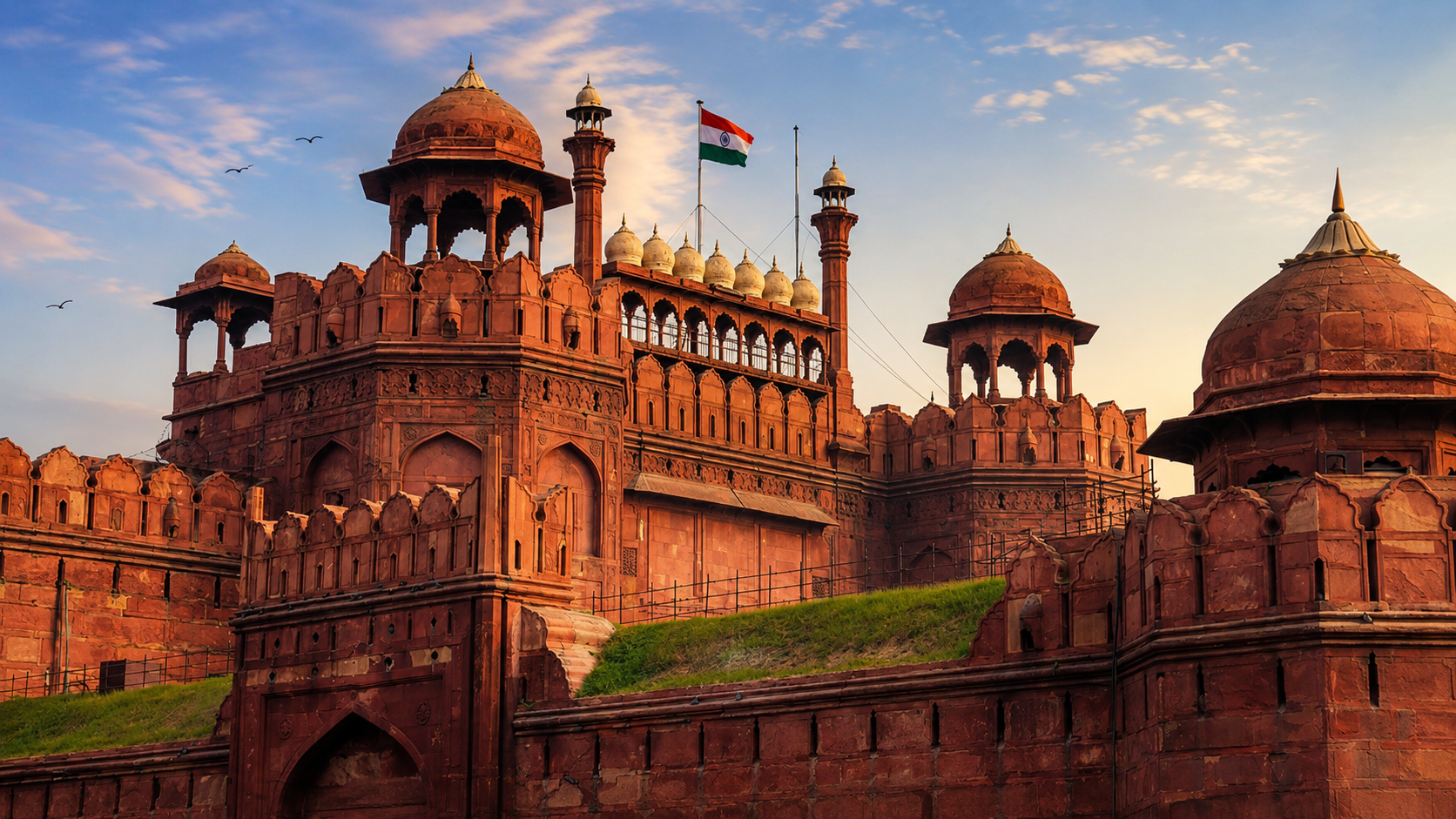
Vande Mataram will get played for the first time in India's 80 years of independence from the ramparts of Red Fort on 15th August, 2026, 150 years after Bankim Chandra Chattopadhyay wrote it. Defence Minister Rajesh Kumar Singh, announcing the change at a press conference in New Delhi said;
"This is for the first time that the sequence will be such as he will come to the rampart, after which the national song is played, and everybody will remain standing thereafter, he will unfurl the flag and the national anthem will be played."
Why the Timing Matters
The song is 150 years old on this Independence day, and the change is a part of a national celebration of the song, which started on November 7, 2025, the day Chattopadhyay commissioned the composition a year ago.
Until recently, during formal state occasions Vande Mataram was performed only in the opening two stanzas, which are more focused on the motherland, the later four stanzas, which are more focused on the goddess-inflected imagery, were usually omitted from formal performances.
This year, that is not the case: The Union Home Ministry gave detailed guidelines on February 11, 2026, for the performance of the National Song and National Anthem together, including in the President's presence during his arrival, flag unfurling and speeches by the Governor.
The size of the Commemoration
The song is scheduled to be played when the Prime Minister reaches at the Red Fort after which he would unfurl the National Flag and address the nation during the 80th Independence Day celebration, officials said.
A Mi-17 helicopter from the Indian Air Force will fly over of the gathering and drop flower petals along with a commemorative banner over Gyanpath opposite the Red Fort ramparts, as the cadets of NCC and My Bharat will form the word Vande Mataram in the ground.
A number of about 5,000 special guests, who have made a mark in their respective areas of activity, are also expected to attend.
The commemoration year has already started and on November 7th, 2025, Prime Minister Narendra Modi inaugurated the year-long commemoration by releasing a commemorative stamp and a commemorative coin at the Indira Gandhi Indoor Stadium in New Delhi.
A wider Cultural Register
The song has also taken on a worldwide dimension – on August 22, 1907, Madam Bhikaji Cama hoisted the first Indian tricolour outside India in Stuttgart, Germany which is also in the song's international links to the struggle for independence.
The song was written in Bengali and first published in the journal ‘Bangadarshan’ in Chattopadhyay's novel ‘Anandamath' and thus came to have the formal status of India's National Song, separate from but equal to the National Anthem.
Beyond Symbolism: What it Means from a practical standpoint
When change of this nature is happening, it is not usually for aesthetic reasons. The six-stanza version of Vande Mataram being elevated to the standard state protocol is indicative of a larger cultural and political nationalism to reclaim the iconography of pre-Independence nationalism through contemporary state ceremony which has been part of several commemorative programs this year.
The change is an opportunity for citizens to reflect on a passage of scripture they may have memorised only in a part and whose role in the freedom struggle they are not familiar with.
Looking Ahead
Events are planned to take place throughout ministries and states and will be ongoing until November 7, 2026. So, Independence Day 2026 will be its symbolic half way-point and will mark the time when this song will come to the nation's most familiar ceremonial stage, from stamps and parades.