
Why is FIA Abandoning 50-50 power split?
F1’s latest era is already seven rounds in but the new power unit formula has raised many eyebrows in the paddock.
SYNOPSIS
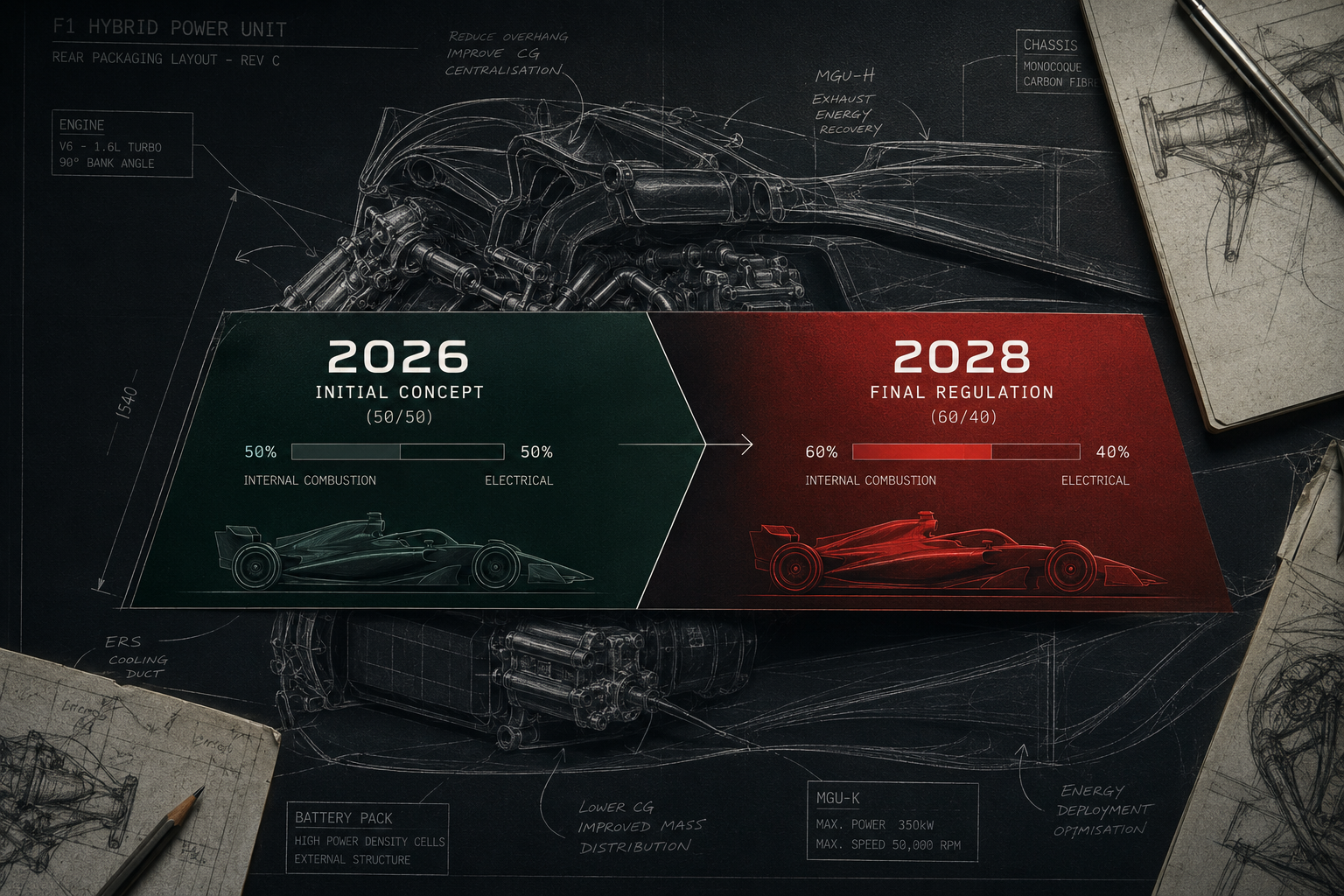
FIA has officially ratified major hardware changes for the 2027 and 2028 Formula1 seasons. The sport is moving away from the highly criticized 50/50 engine split and will increase the reliance on the Internal Combustion Engine (ICE) to give cars more flat-out pace and eliminate energy shortage. It includes targeted adjustments to ICE, fuel energy flow and energy recovery system deployment, together with increased flexibility in energy management. Supporting measures relating to power unit supply conditions, race operations and the relevant financial regulations are also included.
Fifty-Fifty Fail: Why the 2026 Concept Stalled?
The original concept of splitting the power 50/50 between the combustion engine and the battery created several fundamental racing problems:
Severe Engine Starvation: The battery relies entirely on recovering energy during braking, drivers were frequently draining their batteries on long straights.
Forced "Lift and Coast": To ensure the battery has enough power to maintain high speeds, drivers had to heavily lift off the throttle early before entering corners to regenerate energy. Early in the season drivers began to voice complaints that this split forced more 'lift and coasting' and unnatural driving style.
Driver Frustration: Drivers disliked the energy management demands, with some comparing the race-style and battery-boosted passing to arcade games like "Mario Kart".
The 2027–2028 Roadmap: New Ratio for Pure Racing
To fix these issues, F1 teams and power unit manufactures fast-tracked rule changes.
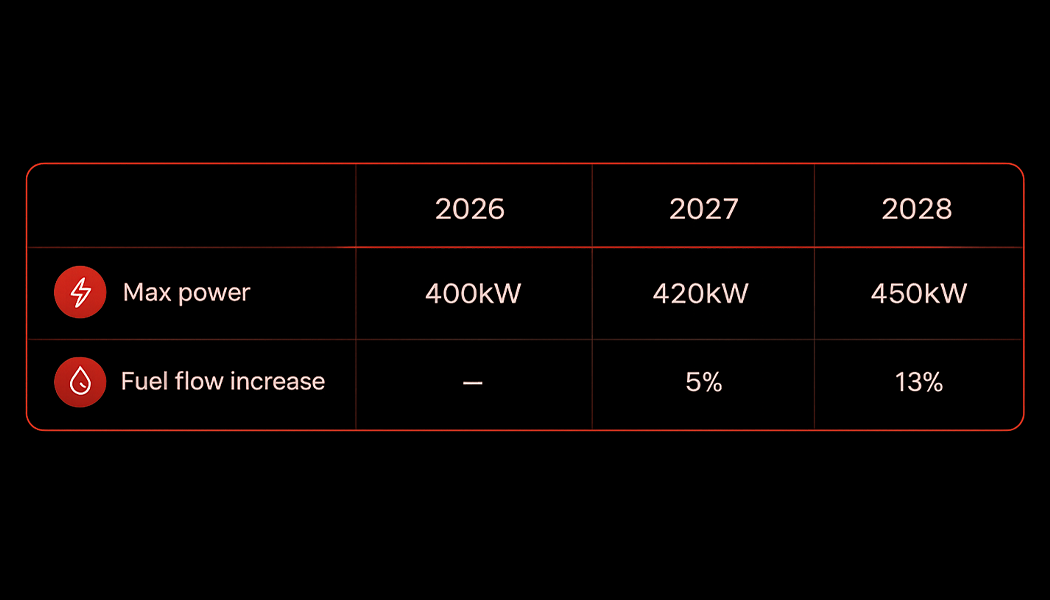
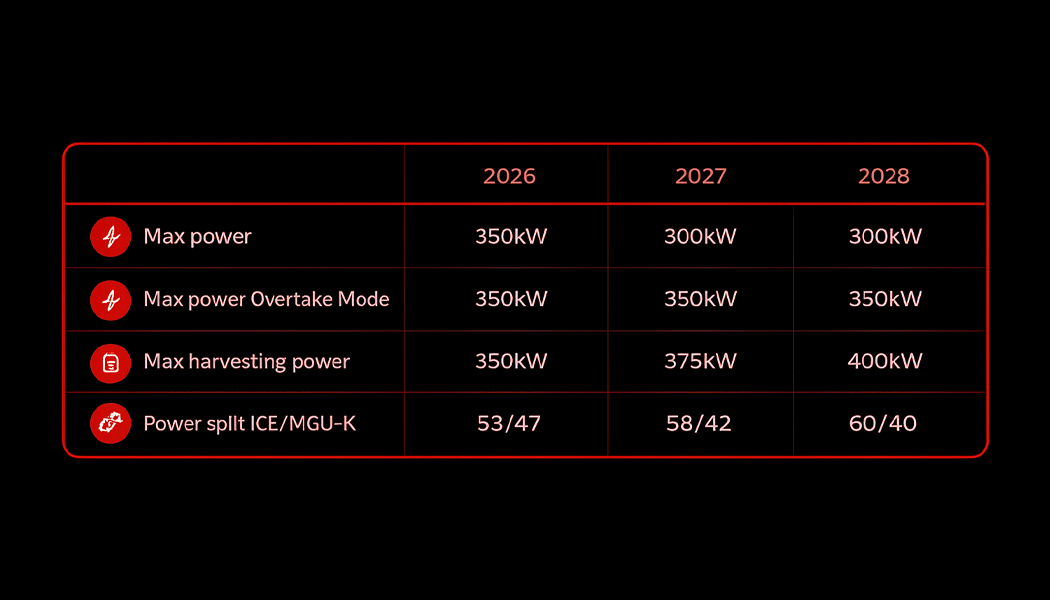
The new split: The power ratio will shift to a 58% internal combustion engine and 42% battery power. ICE output will increase to 420kW, while the battery power will drop to 300kW. ICE capacity has been increased by 25bhp whilst the battery will produce 67bhp less, achieving 58/42 split in favor of the combustion engine.
The 2028 ratio will further shift to 60/40 split in favor of the combustion engine. ICE output will reach 450kW and also capable of producing up to 600bhp.
Increased Performance: The rules will increase the fuel flow and engine output while reducing the demand on the battery, allowing drivers to go faster and rely less on energy-saving tactics. Further assistance will come through increase in the maximum allowance for harvesting, up from 350kW this year to 375kW in 2027 and 400Kw a year later, with battery capacity jumping up from 4MJ this year to 4.5MJ in 2027 and 5MJ in 2028.
Fuel Adjustments: Fuel flow rates will be expanded by 5% in 2027 and 13% by 2028.
Hardware Tweaks: Adjustments to the power units are being paired with chassis updates, including alterations to accommodate larger fuel tanks.
Testing Changes: Starting in 2027, pre-season testing will be permanently increased from three to four days to help teams manage the new technology.
Safety Protocols: Heat hazard can now be declared 24 hours in advance for individual sessions (sprint or grand prix) rather than the whole weekend. Wet weather "boost mode" has been reintroduced for low-visibility or wet track conditions, ensuring power drops are mitigated without increasing peak vehicle output.
Why the 60/40 Shift is a Strategic Necessity?
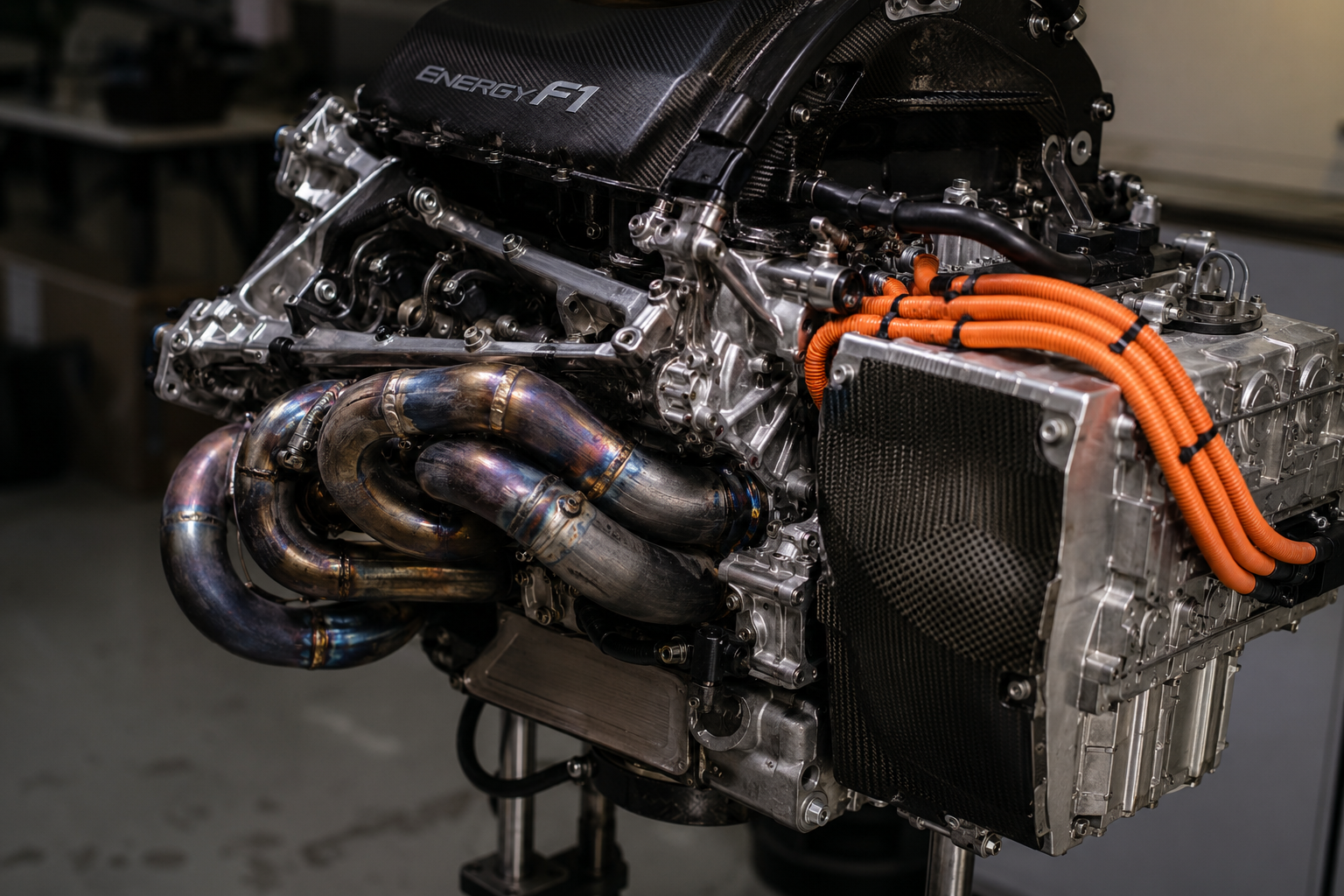
More natural driving by giving priority to combustion, higher overall speeds with increased fuel flow ensures maximum acceleration is sustained longer down straights. Simulation data shows these adjustments will make cars up to four seconds per lap faster by 2028.
Lessening extreme battery dependence resolves dangerous straight-line speed discrepancies, especially when transitioning into high-speed corners like Suzuka's 130R.
The old concept of 2014 - 2025 era provided high combustion reliance, higher top speeds but less sustainability and 2026 season engine was heavily criticized for extreme battery management but the new 60/40 configuration perfectly bridges the gap, it keeps modern sustainability goals intact while returning raw, traditional racing performance.
The sudden change resolves serious paddock anxiety, because of strict financial cost caps, multiple teams planned to carry their 2026 chassis over into 2027, had the 50/50 fuel limitations remained, teams would have been forced to design expensive, larger fuel tanks or shorten race distances entirely. The expanded fuel flow solves this problem without ruining the chassis budgets.
Analytical Conclusion: A Return to Proper Racing?
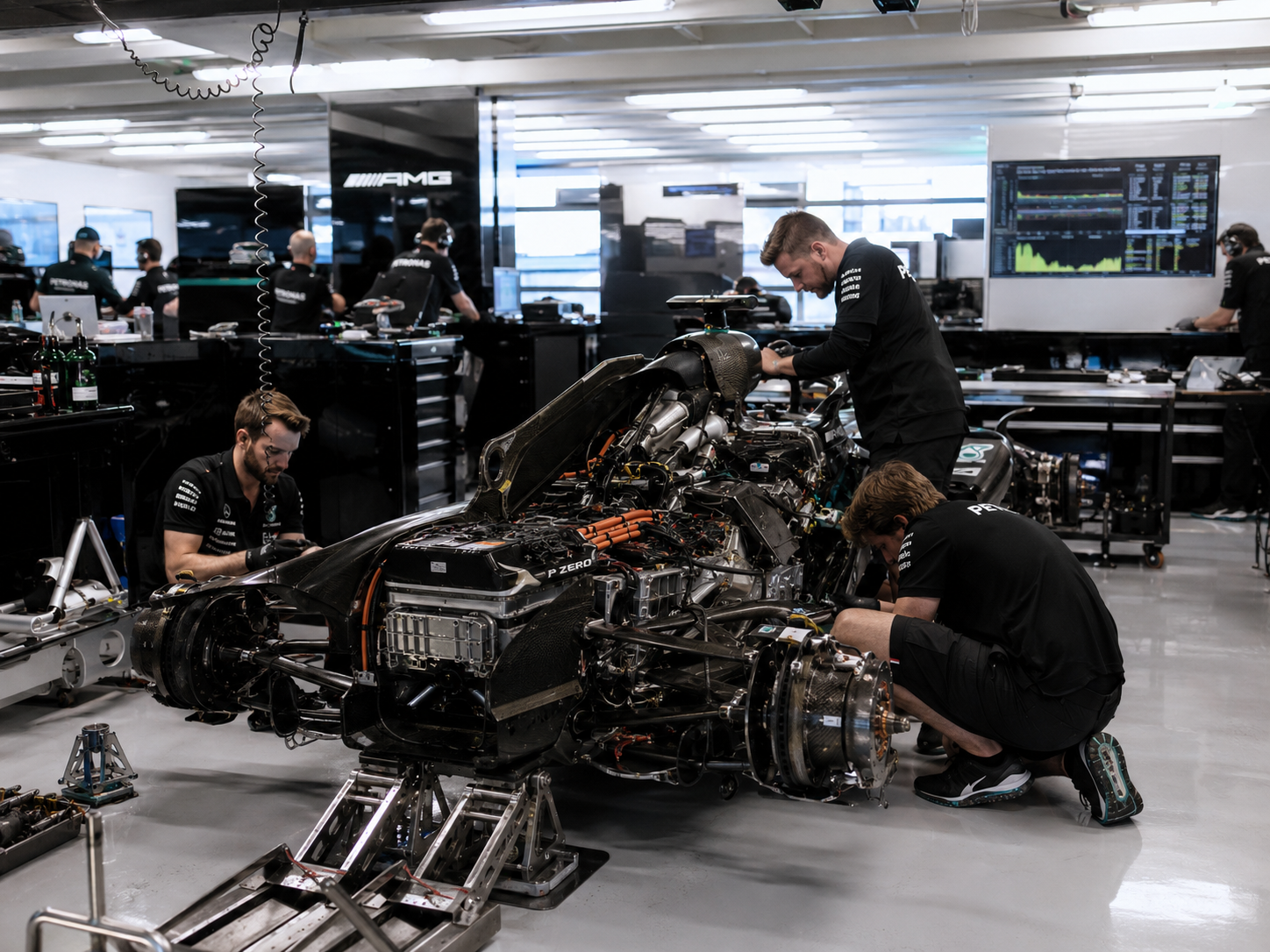
While a staggered move towards a more powerful ICE had been provisionally agreed upon the stakeholders and the FIA in June, the WSMC has finally given it the official green signal.
Ben Sulayem has also hinted at a possible shift back to the V8 engines in the not so distant future for F1.
Max Verstappen was particularly vocal about his support for the changes, urging the teams to approve the decision so drivers could return to so-called proper racing rather than energy management. As the four-time world champion Verstappen - arguably the most vocal critic of the 2026 ruleset said:
"I would have hoped that next year would have been already what we get in 2028. But I also, of course, understand that there is sometimes politics involved for that. At least the changes that they are making are heading in the right direction, so I guess that’s a good thing." meaning he would stay on into 2027 season.